
Last updated November 2, 2026
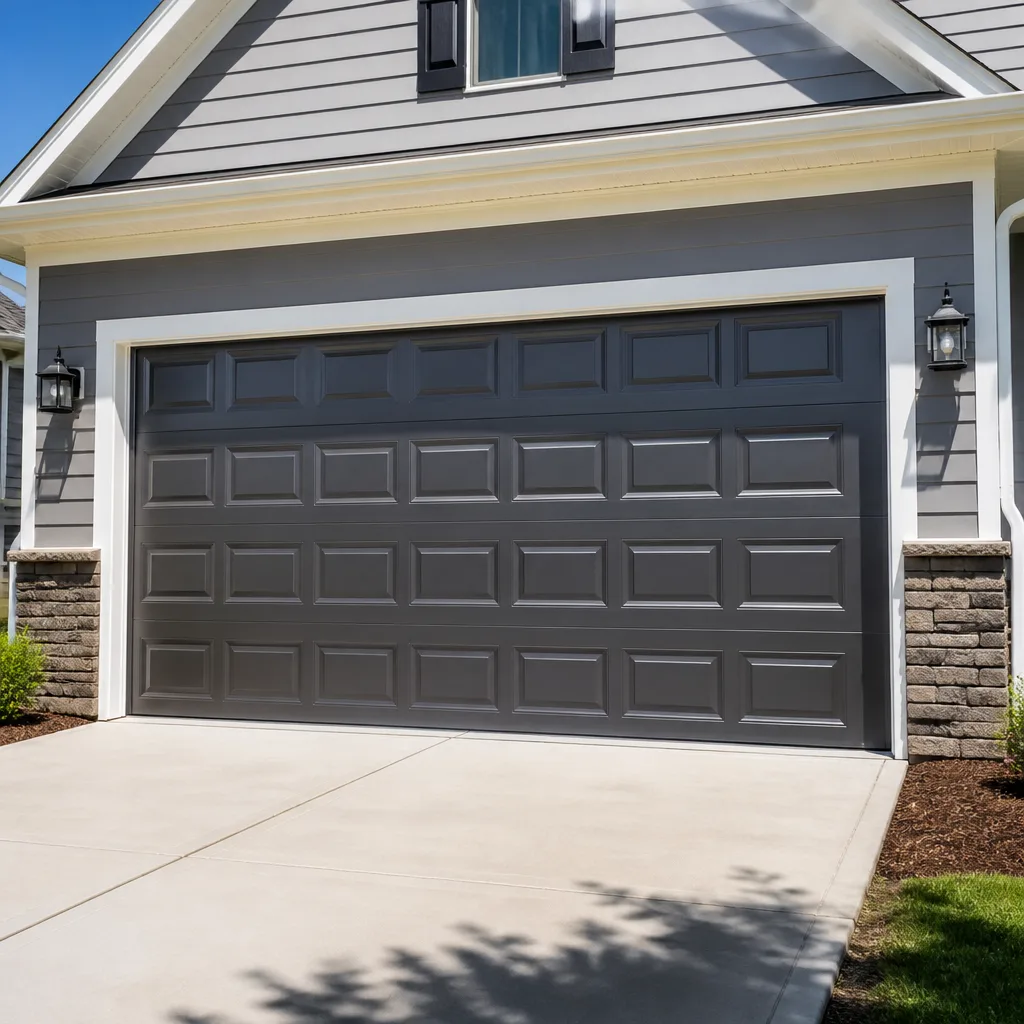 Raised-panel steel
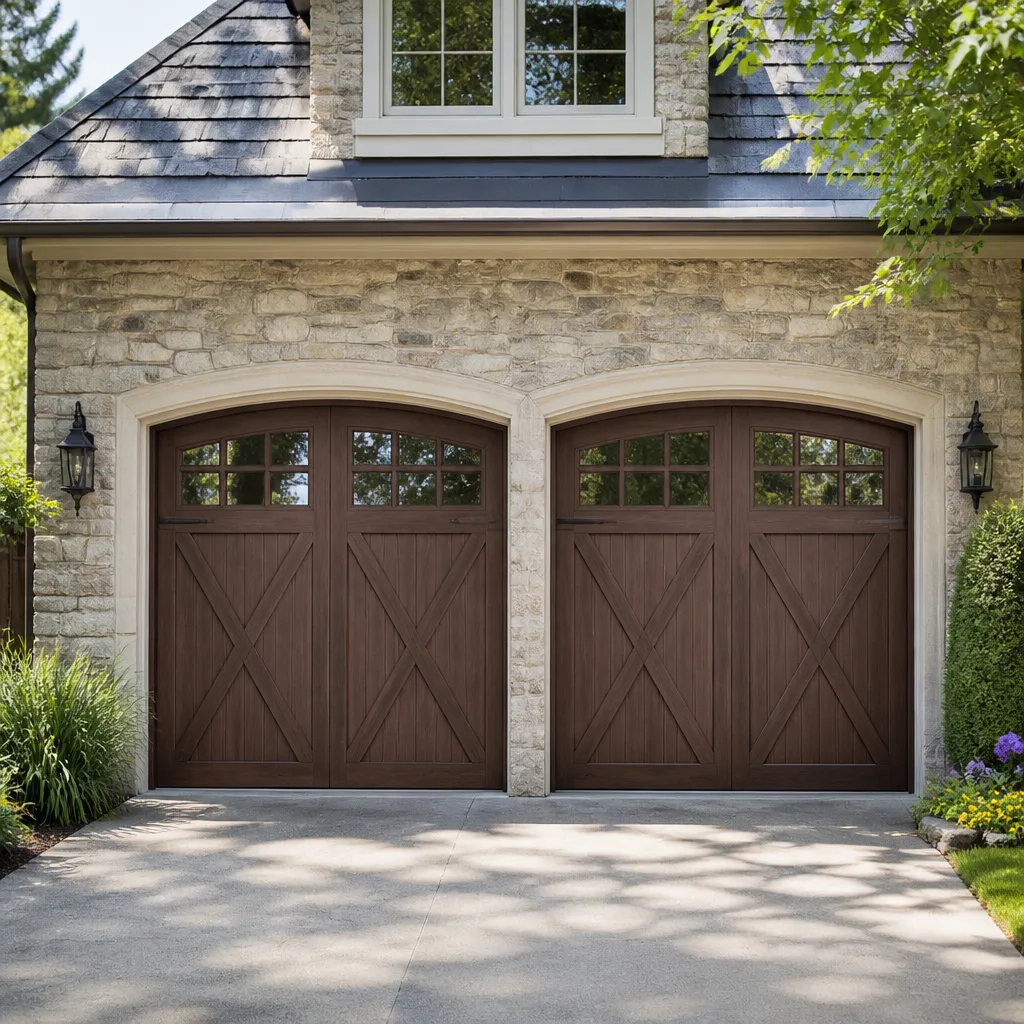 Carriage house
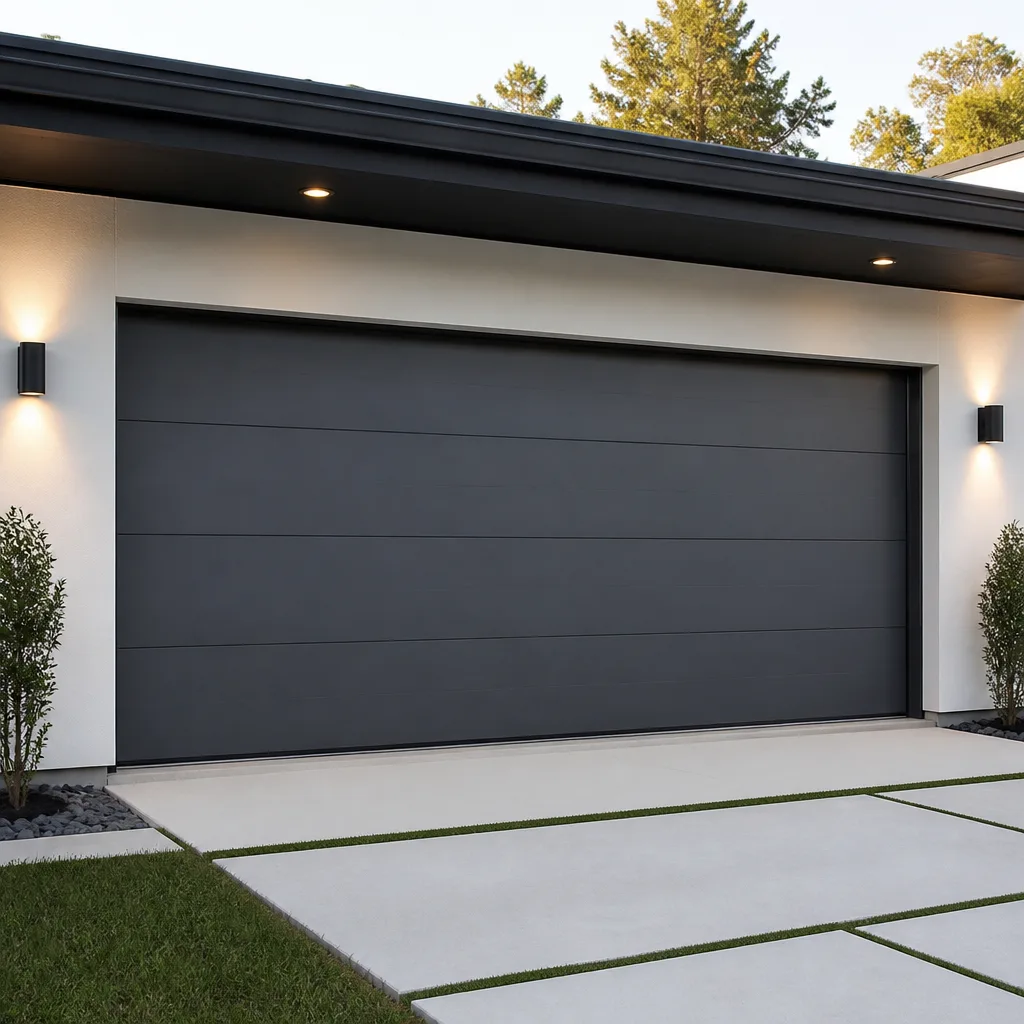 Modern flush
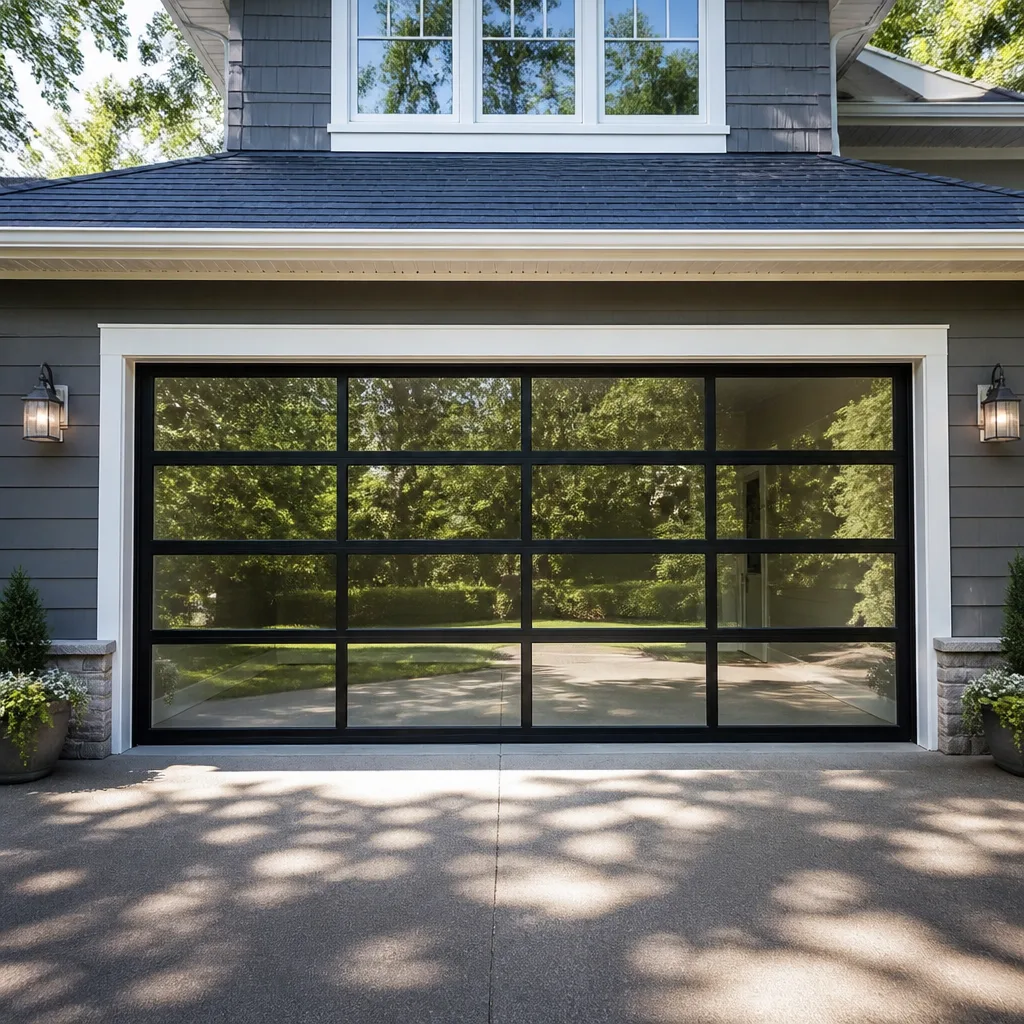 Full-view glass
 LiftMaster openers
 Chamberlain openers
Full 25-point door and opener safety check with every visit - springs, cables, rollers, tracks, and your LiftMaster or Chamberlain opener included
You get a price before we start. It does not change when the truck arrives.
Get your free estimateGarage Door Permits, Codes & Inspections in CA: What You Need to Know
The most expensive garage door mistake in California isn’t a bad spring or a misaligned track. It’s an undocumented header modification that surfaces during escrow. We’ve watched real estate transactions in Milpitas collapse at the inspection stage because a previous owner replaced a garage door, altered the framing above it, and never pulled a permit. The work might have been structurally sound. It didn’t matter. The title company flagged the unpermitted modification and the sale stalled until the seller paid thousands to retroactively legalize the work.
This guide draws the actual line between when a garage door job in California requires a permit and when it doesn’t. You’ll learn the specific code sections that govern garage door installations, how UL 325 affects your opener’s legal status, what seismic brackets have to do with your door’s weight, and the step-by-step process for retroactively documenting work that was done without a permit. If you own a home in Milpitas or anywhere in Santa Clara County, this is the information most contractors won’t volunteer until it’s too late – though our Garage Door Repair Troubleshooting: Common Problems and How to Fix Them can help you spot issues early.
Styles & brands we work with
- Raised-panel steel
- Carriage house
- Modern flush
- Full-view glass
- LiftMaster openers
- Chamberlain openers
Quick Answer
Most garage door replacements in California do not require a building permit as long as the opening’s dimensions, framing, and electrical circuit remain unchanged. A permit becomes mandatory when you alter the header or any structural framing, widen the opening, install a new electrical circuit for an opener, or install a door required to meet fire-rated assembly standards on an attached garage. Like-for-like replacement of door panels, tracks, springs, and openers plugged into an existing outlet is classified as repair work and falls below the permit threshold.
Table of Contents
- When a Garage Door Permit Is Actually Required in California
- When No Permit Is Needed: The Like-for-Like Repair Rule
- UL 325 Compliance and Opener Liability in Santa Clara County
- Egress Compliance for Attached Garages: Fire-Rated Door Requirements
- Seismic Bracket Requirements: Door Weight, Height, and Engineering Docs
- The Milpitas Permit Process: Step by Step
- How to Retroactively Document Unpermitted Work Before Listing a Home
- Common Mistakes to Avoid
- When to Call a Professional
- Frequently Asked Questions
- The Bottom Line
When a Garage Door Permit Is Actually Required in California
California’s building standards are codified in the California Code of Regulations, Title 24, which adopts and amends the International Residential Code (IRC). Under the California Residential Code (CRC), a building permit is required for any work that involves structural modifications, changes to a building’s means of egress, or new electrical circuits. For garage doors, this translates into four specific trigger scenarios.
First: structural header modifications. If replacing a garage door requires removing or altering the header beam above the opening, you need a permit and an engineering review. This is the scenario that creates the most title problems down the road because the header carries the load of the wall and roof above the garage opening. Even a “minor” notching or relocating of the header changes the load path.
Second: widening or resizing the door opening. Changing the rough opening dimensions means moving king studs, jack studs, or the header itself. That’s structural work, full stop. No city in California – including Milpitas – classifies this as a repair.
Third: new electrical circuits. Installing a garage door opener that requires a new dedicated circuit, a new outlet, or any wiring change to the existing electrical system triggers the electrical permit requirement. Plugging an opener into an existing grounded outlet does not.
Fourth: fire-rated assembly requirements. On attached garages, the wall and door separating the garage from living space must meet specific fire-resistance ratings. If a new door installation requires changing the fire-rated assembly – such as replacing a solid-core man door with a windowed door, or altering the drywall on the garage side of the wall – a permit and inspection are mandatory.
In Milpitas specifically, the Building and Safety Department enforces the 2022 California Residential Code with local amendments. We see homeowners in neighborhoods like Parktown and Sunnyhills get tripped up by the header issue most often, usually because a previous owner already modified the framing decades ago and the current owner discovers it only when hiring a contractor for a door replacement that exposes the existing work.
When No Permit Is Needed: The Like-for-Like Repair Rule
Here’s the line most people miss: replacing a garage door panel, spring, track, cables, hinges, rollers, or opener – when the replacement parts match the existing door’s specifications and nothing structural changes – is classified as repair, not construction. The California Residential Code explicitly exempts ordinary repairs from the permit requirement. CRC Section R105.2 lists work exempt from permits, and “repairs” defined as the replacement of existing parts with similar parts for maintenance purposes falls under this exemption.
What does like-for-like actually mean in a garage door context? A spring replacement uses the same wire size, length, and torque rating as the original. A panel replacement uses the same thickness and insulation R-value. A track replacement uses the same radius and gauge. The door’s weight, balance point, and operating characteristics remain essentially unchanged. Nothing about the opening’s structural capacity is altered.
This applies to work on all major brands. Whether the existing door is a Clopay, Amarr, or Wayne Dalton unit, a like-for-like repair on any of these systems does not require a permit in Milpitas or anywhere else in California. The key phrase is “similar parts for maintenance purposes” – if the replacement part performs the same function at the same load rating, you’re doing maintenance.
What About Full Door Replacement?
Replacing an entire door – panels, tracks, and hardware – with a new door that fits the existing rough opening also falls below the permit threshold, provided the opening dimensions don’t change and no structural members are altered. This surprises most homeowners. They assume any full door replacement requires a permit. It doesn’t, as long as the header, studs, and rough opening remain untouched.
The one caution here concerns weight. If the new door is significantly heavier than the old one – say you’re swapping a lightweight aluminum door for a solid wood custom door – the existing spring system and possibly the framing connections need recalculation. In our experience at Garage Door Service Milpitas home, we’ve seen doors that were 40% heavier than the originals installed without spring recalculation, which puts premature wear on the entire system.
UL 325 Compliance and Opener Liability in Santa Clara County
UL 325 is the safety standard for garage door openers, and it’s the part of the code most Milpitas homeowners have never heard of. The standard has existed since 1993, and every opener sold in the United States since then must include specific safety features: an auto-reverse mechanism triggered by an obstruction, and an entrapment protection system, typically photoelectric sensors mounted 6 inches above the floor on each side of the door opening.
Here’s the liability issue most people miss: if your garage door opener predates 1993 and lacks these safety features, you don’t just have an old opener – you have a code-noncompliant installation. Review our Garage Door Warning Signs: A Milpitas Homeowner’s Reference Guide to catch problems before they become liabilities. That’s a liability exposure every time the door cycles. If someone is injured by a non-compliant opener, the homeowner’s insurance position is significantly weakened, and a personal injury claim becomes much harder to defend.
Santa Clara County building inspectors treat UL 325 compliance as a baseline requirement during any inspection that touches the garage. If you’re getting a final inspection on other permitted work and the inspector notices a pre-1993 opener, expect a correction notice. The City of Milpitas follows the same standard.
What to Check on Your Existing Opener
- Look for a UL 325 compliance label on the opener motor housing. If it’s missing or predates 1993, the opener is non-compliant.
- Test the photoelectric sensors by blocking the beam while the door closes. The door should reverse immediately. If it doesn’t, the sensors are misaligned, non-functional, or disconnected.
- Check the auto-reverse force setting by placing a 2×4 flat on the ground under the closing door. The door should reverse within 2 seconds of contacting the board.
- Confirm the opener’s manual release handle is accessible and functional – this is also part of the UL 325 entrapment protection requirements.
We work on openers from LiftMaster, Chamberlain, Genie, and Craftsman, and while all post-1993 units from these brands are UL 325 compliant by design, we regularly find openers where the safety features have been deliberately bypassed or disabled. A misaligned sensor that’s been re-angled to face the ceiling doesn’t just fail inspection – it defeats the entire purpose of the safety system. Garage Door Opener Repair in Milpitas frequently involves restoring these bypassed safety systems, not just fixing mechanical problems.
Egress Compliance for Attached Garages: Fire-Rated Door Requirements
For homes with attached garages, the California Residential Code mandates specific fire-separation requirements between the garage and living areas. The relevant code is CRC Section R302, which establishes that walls and doors separating a garage from dwelling spaces must meet minimum fire-resistance ratings. For the garage-to-house door (the man door, not the vehicle door), the requirement is a solid wood door at least 1-3/8 inches thick, a solid or honeycomb-core steel door of the same thickness, or a door with a 20-minute fire rating.
The large vehicle door itself has fewer fire-rating requirements, but it does have egress implications. The vehicle door is not considered a means of egress, so it doesn’t need to meet residential egress door standards for swing direction or hardware. This is a common point of confusion – homeowners think all doors need egress-compliant hardware. They don’t. The vehicle door’s job is fire separation, not occupant egress.
What does trigger an inspection issue on an attached garage is altering the fire-rated assembly. If a door installation or opener installation involves cutting into the garage ceiling (for example, installing a jackshaft opener on the wall instead of a trolley opener on the ceiling), and that ceiling is part of the fire-rated separation, you’ve just modified a fire-rated assembly. In Milpitas, inspectors want to see that any penetrations through the fire-rated ceiling or walls are sealed with fire-rated caulk or foam, and the work may require a permit because it touches the fire separation.
On a practical level, we’ve seen Milpitas homeowners in the Hillcrest neighborhood get correction notices simply because a previous owner had installed shelving that pierced the fire-rated drywall ceiling in the garage. When a new door installation brings an inspector to the property, that pre-existing condition becomes the inspector’s finding, even though it had nothing to do with the door.
Seismic Bracket Requirements: Door Weight, Height, and Engineering Docs
California’s seismic code requirements for garage doors are often under-discussed, but they matter more in Milpitas than in most of the country. The city sits near the Hayward Fault and the Calaveras Fault, and the California Building Code requires specific anchoring for heavy overhead structures in seismic zones.
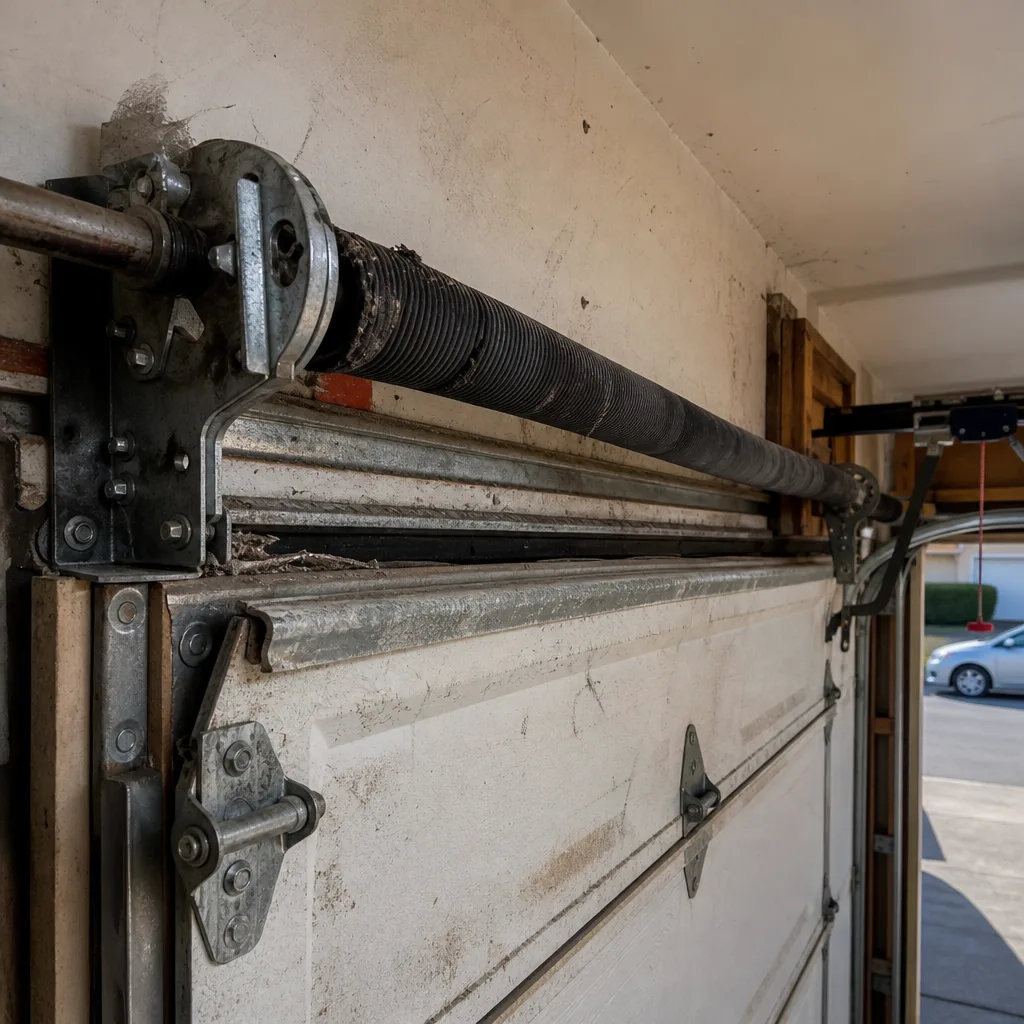
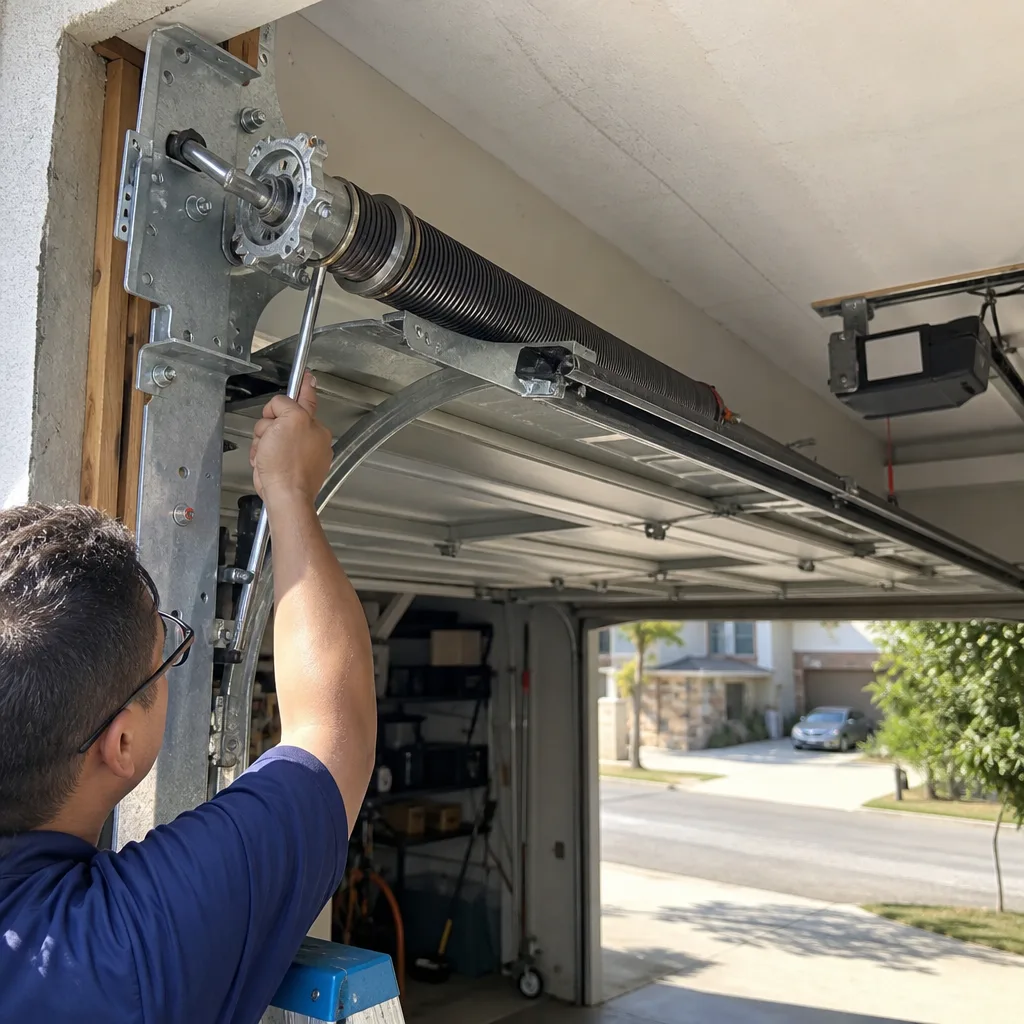
For garage doors, the seismic concern is the torsion spring assembly and the way the door’s weight transfers to the wall above the opening. A residential torsion spring system can store 50 to 150 pounds of torque, and in a seismic event, an improperly anchored spring assembly becomes a projectile risk. The California Building Code requires that spring brackets and track assemblies be anchored into structural members (not just drywall or stucco) using bolts, not wood screws.
The threshold that triggers engineering documentation is door weight and header span, not door size alone. In practice:
- Doors under 200 pounds on a standard 16-foot-wide opening typically don’t require engineered seismic provisions.
- Doors between 200 and 400 pounds need spring brackets through-bolted to the header with a minimum 2-inch embedment into solid framing.
- Doors over 400 pounds – uncommon in residential but found on custom solid wood doors – require engineering documentation for the spring shaft anchors, and we recommend a stamped letter from a structural engineer.
In our experience installing Amarr and Wayne Dalton doors in Milpitas, most standard residential installations fall under the 200-pound threshold. But when a homeowner upgrades from an insulated steel door to a custom wood door – a popular upgrade in the foothill neighborhoods – the weight increase crosses into the territory where through-bolting becomes mandatory, and we document that installation with photos showing the bolt pattern into the header.
The Milpitas Permit Process: Step by Step
If your garage door project does trigger a permit – typically because of header work or a new electrical circuit – here’s the actual process in the City of Milpitas, based on the Building and Safety Department’s current procedures.
- Determine permit type. Structural header work requires a building permit. New electrical work requires an electrical permit. Both can be filed under the same application if the scope covers both.
- Prepare documents. You’ll need a site plan showing the garage location, a drawing or specification sheet for the new door, and if header work is involved, an engineering calculation or signed letter from a California-licensed structural engineer confirming the new header’s load capacity.
- Submit the application. Milpitas accepts permit applications online through the city’s permit portal. Filing fees for a typical garage door structural permit run a few hundred dollars, though exact costs vary by job valuation.
- Plan review. For structural work, expect a plan review cycle of 1 to 2 weeks. For electrical-only permits, the review is typically faster, often a few days.
- Schedule inspections. A structural header inspection happens at the rough-in stage, before the door is installed. A final inspection happens after the door is hung and the opener is operational.
- Final inspection. The inspector checks the header connection, the spring bracket anchoring, the UL 325 safety features on the opener, and the fire-rated assembly if applicable. Once passed, the permit closes and the work is documented.
For homeowners who want someone else to handle this, Garage Door Installation in Milpitas can coordinate the permit application and inspection scheduling as part of the installation scope. Some Milpitas contractors hesitate to pull permits on smaller jobs – we recommend insisting on it any time structural work is involved.
How to Retroactively Document Unpermitted Work Before Listing a Home
This is the section that saves real estate transactions. If your Milpitas home has unpermitted garage door work – a modified header, a widened opening, a non-compliant opener installation – you can retroactively document it before listing. For ongoing upkeep that prevents these headaches, see our Garage Door Repair Maintenance Checklist for Milpitas Homeowners. Here’s the actual process, not the generic advice you find on forums.
- Hire a licensed contractor or structural engineer to assess the work. The City of Milpitas will not accept a homeowner’s self-assessment. You need a professional evaluation confirming the existing work meets or exceeds current code requirements.
- File a permit application titled “Retroactive Permit” or “As-Built Documentation.” Most California cities, including Milpitas, accept retroactive permit applications. The process is the same as a new permit, but the plan review evaluates existing conditions instead of proposed work.
- Address any deficiencies found during the plan review. If the header is undersized or the anchor bolts are incorrectly spaced, you’ll need to make corrections before the permit can close. This is where costs escalate – correcting existing deficiencies often exceeds the original cost of the door replacement.
- Schedule the inspection. The inspector will verify the as-built conditions match the application. For header work, this means visually confirming the structural member’s size, species, and connection details.
- Close the permit. Once the final inspection passes, the permit is recorded in the city’s system. This is the documentation that satisfies a title company’s unpermitted-work inquiries during escrow.
The cost range for retroactive documentation in Milpitas varies widely. A simple electrical permit for an opener circuit might run a few hundred dollars in fees plus inspection time. A retroactive structural permit with engineering review can cost $1,500 to $4,000 or more, depending on what the engineer finds. Compare that to the $5,000 to $20,000 a buyer might demand as a concession when unpermitted structural work surfaces during a sale, and the math favors early documentation.
Common Mistakes to Avoid
- Skipping the permit on header modifications. This is the mistake that creates title problems. A header change is structural, and structural work without a permit is the single most common reason garage door installations get flagged during escrow inspections in Milpitas.
- Assuming all “full replacements” need permits. This is the opposite mistake. Homeowners sometimes over-document like-for-like replacements, paying permit fees for work that’s legally classified as repair. Know the line: no structural change, no new circuit, no permit.
- Ignoring UL 325 on an old opener. A pre-1993 opener isn’t just outdated; it’s a code violation. If you’ve been tolerating an old opener because it works, understand that the liability exposure compounds with every year it stays in service.
- Bypassing safety sensors. We’ve seen sensors mounted facing each other on the ceiling, wired around, or zip-tied into permanent alignment. Every one of those is a UL 325 violation and an inspection failure waiting to happen.
- Using wood screws for spring brackets. Torsion spring brackets must be bolted through the header, not screwed into drywall or stucco. This is a visible failure point that any inspector catches immediately.
- Waiting until you’re under contract to address unpermitted work. Once a buyer has leverage, the negotiating position is gone. Document the work before listing, or at minimum before accepting an offer.
- Not documenting the door’s weight when upgrading. If you swap a light door for a heavy one and the spring system isn’t recalculated, you’ll see premature spring failures and potentially a door that won’t stay balanced. This matters in Milpitas’s hillside homes where heavier custom doors are common.
When to Call a Professional
Permit work, structural modifications, and fire-rated assembly compliance are not the places to save money with a DIY approach. If your project involves header modifications, a new electrical circuit, a door weight change that requires spring recalculation, or correction of any deficiency an inspector or home inspector has flagged, call someone who handles this daily. The cost of getting it wrong isn’t just the permit fee – it’s the escrow delay, the buyer’s repair demand, or in the worst case, a structural failure that damages the door and the framing around it.
If you’re in Milpitas and want an honest read on whether your specific door job requires a permit, Garage Door Repair in Milpitas includes that assessment as part of the initial evaluation. We’ll tell you plainly whether your job is repair or construction, and if it’s construction, we’ll walk you through the permit path without upselling work you don’t need. Call (833) 589-9493 for a free estimate.
Frequently Asked Questions
No, not if the replacement fits the existing rough opening and no structural members are altered. A like-for-like full door replacement is classified as repair work under the California Residential Code and is exempt from the permit requirement. The permit becomes necessary only when the opening is resized, the header is modified, or a new electrical circuit is added.
Milpitas permit fees for garage door work vary by job valuation and scope. A simple electrical permit for an opener circuit might cost a few hundred dollars. A structural permit with plan review for header work typically runs higher. Contact the Milpitas Building and Safety Department for current fee schedules, or call (833) 589-9493 and we’ll help you scope the permit requirements accurately.
You can, but the unpermitted work will surface during a diligent buyer’s inspection if it involves structural modifications. Title companies flag unpermitted structural work during escrow, and the seller typically ends up paying to retroactively permit the work or issuing a credit. Retroactively documenting the work before listing is almost always cheaper than negotiating under contract. Call (833) 589-9493 for a free assessment if you’re unsure what’s documented and what isn’t.
UL 325 is the safety standard requiring automatic reverse and photoelectric sensor entrapment protection on garage door openers. Every opener manufactured after 1993 must comply, and non-compliant units are code violations. If your opener predates 1993 or its sensors are misaligned, bypassed, or disabled, the installation is non-compliant and carries liability. Garage Door Opener Repair in Milpitas can restore UL 325 compliance on most openers from LiftMaster, Chamberlain, Genie, and Craftsman.
Seismic bracing requirements depend on door weight and header conditions. Standard residential doors under 200 pounds typically require only proper spring bracket through-bolting. Doors over 200 pounds need through-bolts into solid framing, and doors over 400 pounds require engineering documentation. Most standard steel and aluminum doors fall under the 200-pound threshold, but custom wood doors often exceed it.
Repair means replacing parts with similar parts for maintenance purposes: springs, cables, rollers, tracks, panels, or openers that match the original specifications. Replacement means installing a new door system, which may or may not require a permit depending on whether structural work is involved. A repair never requires a permit. A replacement only requires a permit when the opening, framing, or electrical system changes.
The Bottom Line
California’s garage door permitting rules are simpler than most homeowners fear, but the exceptions carry real financial weight. A like-for-like repair or full door replacement on the existing rough opening requires no permit anywhere in Milpitas. A header modification, opening resize, new electrical circuit, or alteration to a fire-rated assembly does require one, and skipping it becomes a title problem at resale. UL 325 compliance on openers is a baseline safety standard, not a nice-to-have, and retroactively documenting unpermitted work is cheaper before listing than during escrow. When in doubt, get a professional read before you start the job, or browse our more guides & resources for additional help.
Written by the team at Garage Door Service Milpitas, serving Milpitas since 2011.
See the difference
 Before
 After
 Before
 After
 Before
 After