
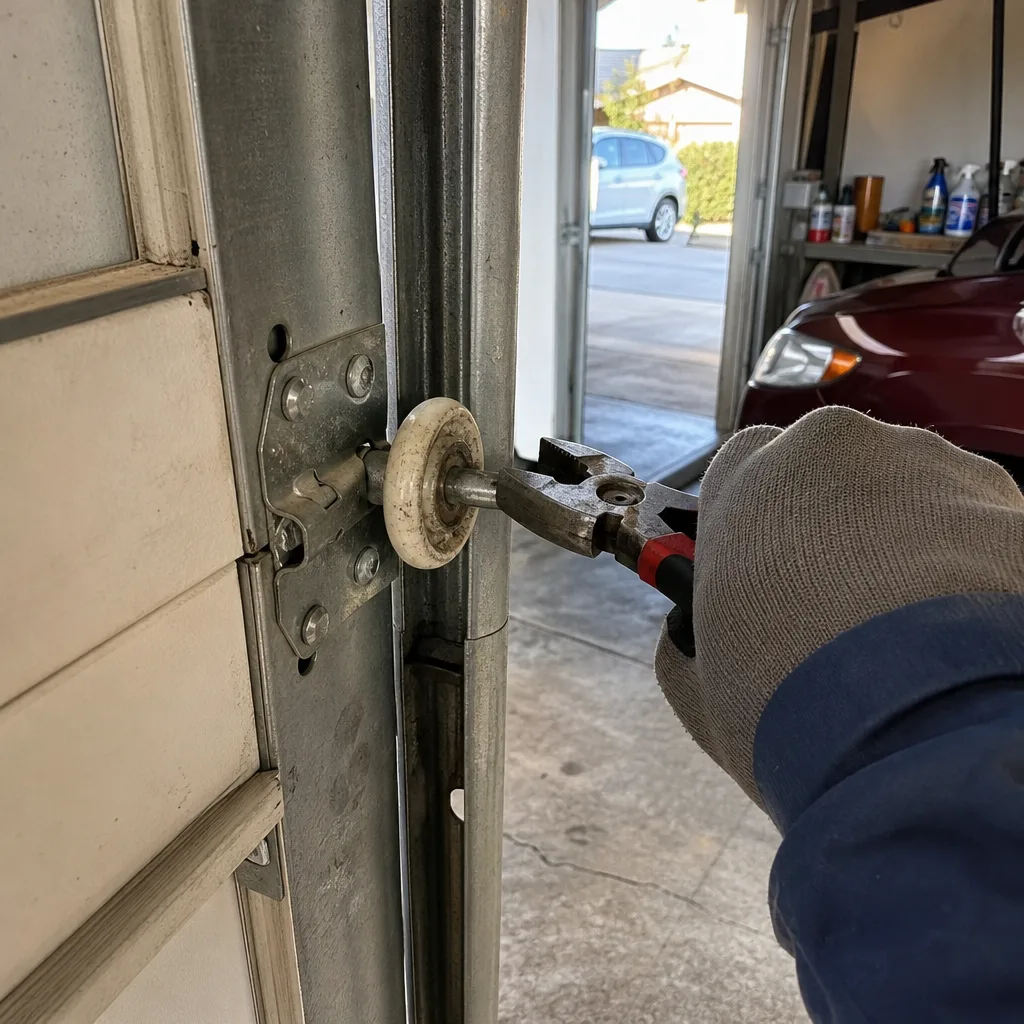
Last updated November 3, 2026
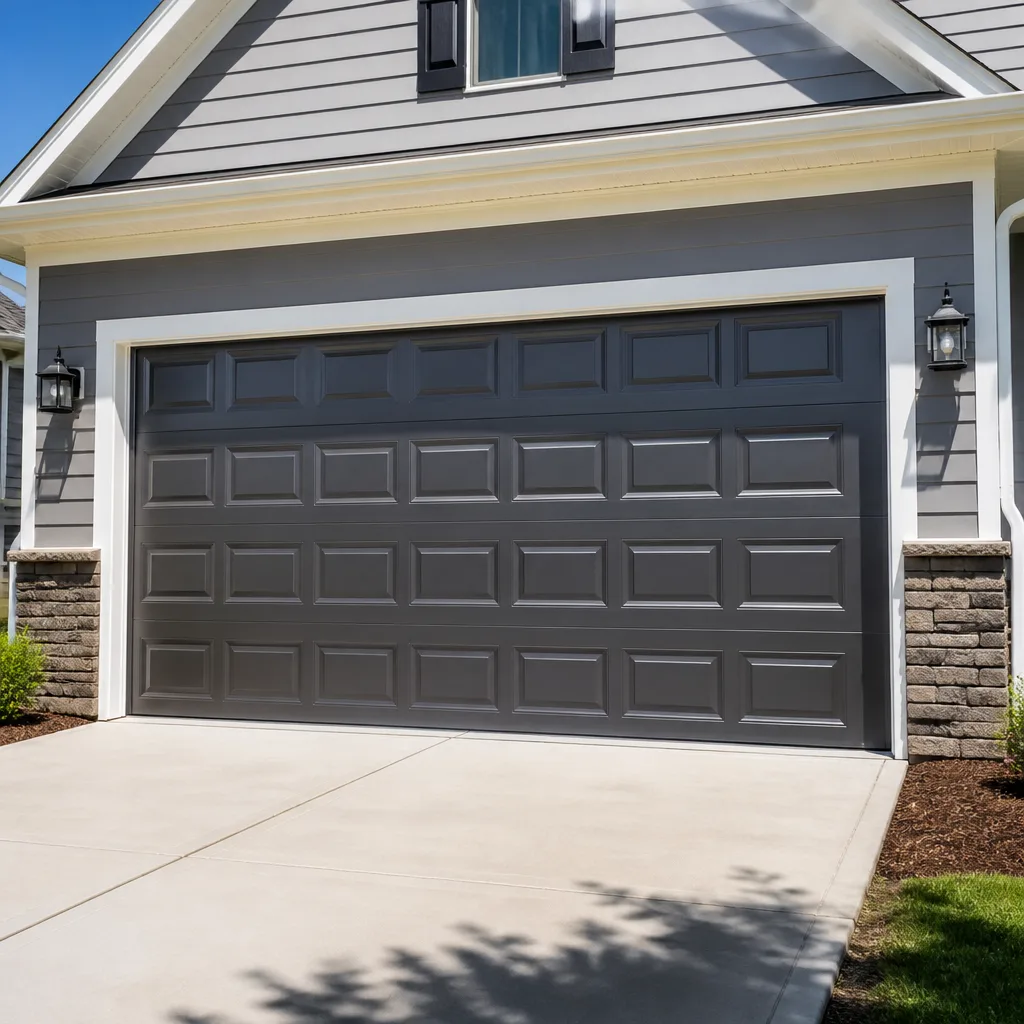 Raised-panel steel
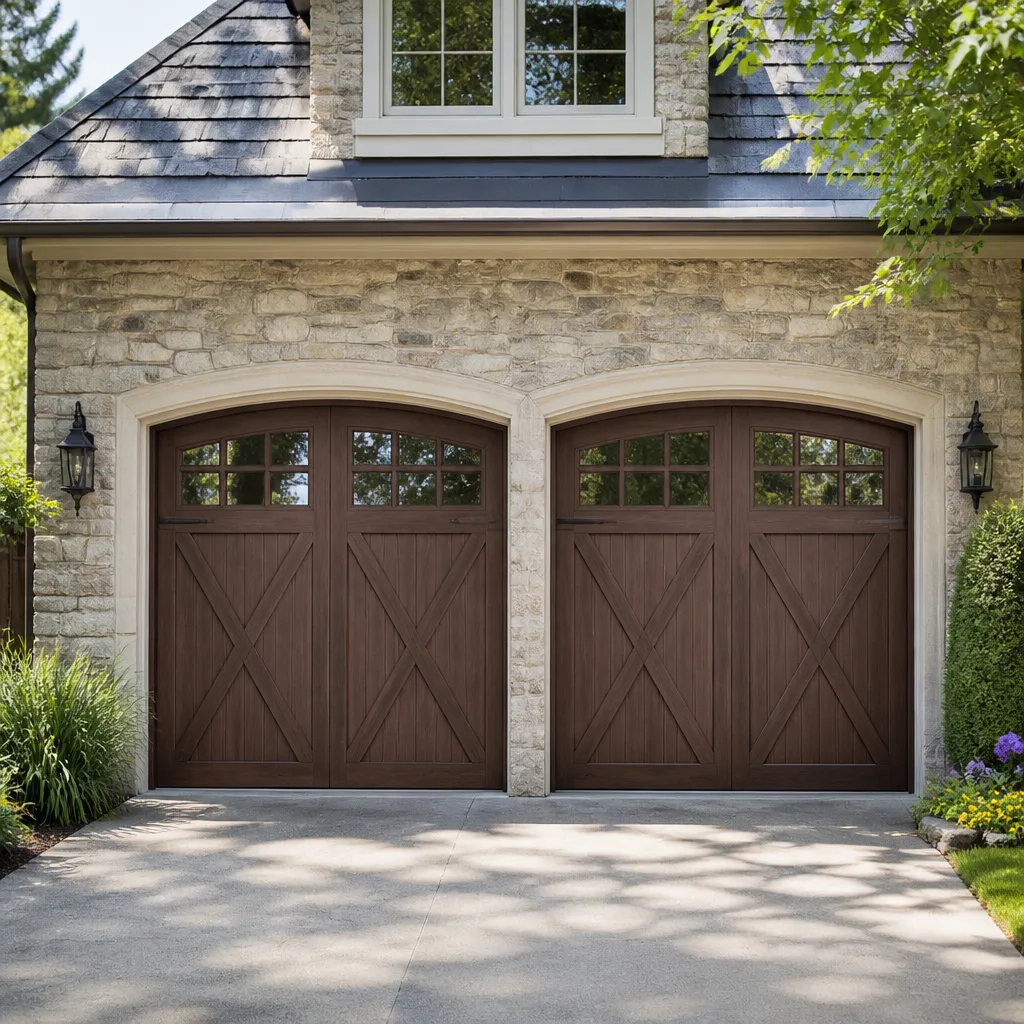 Carriage house
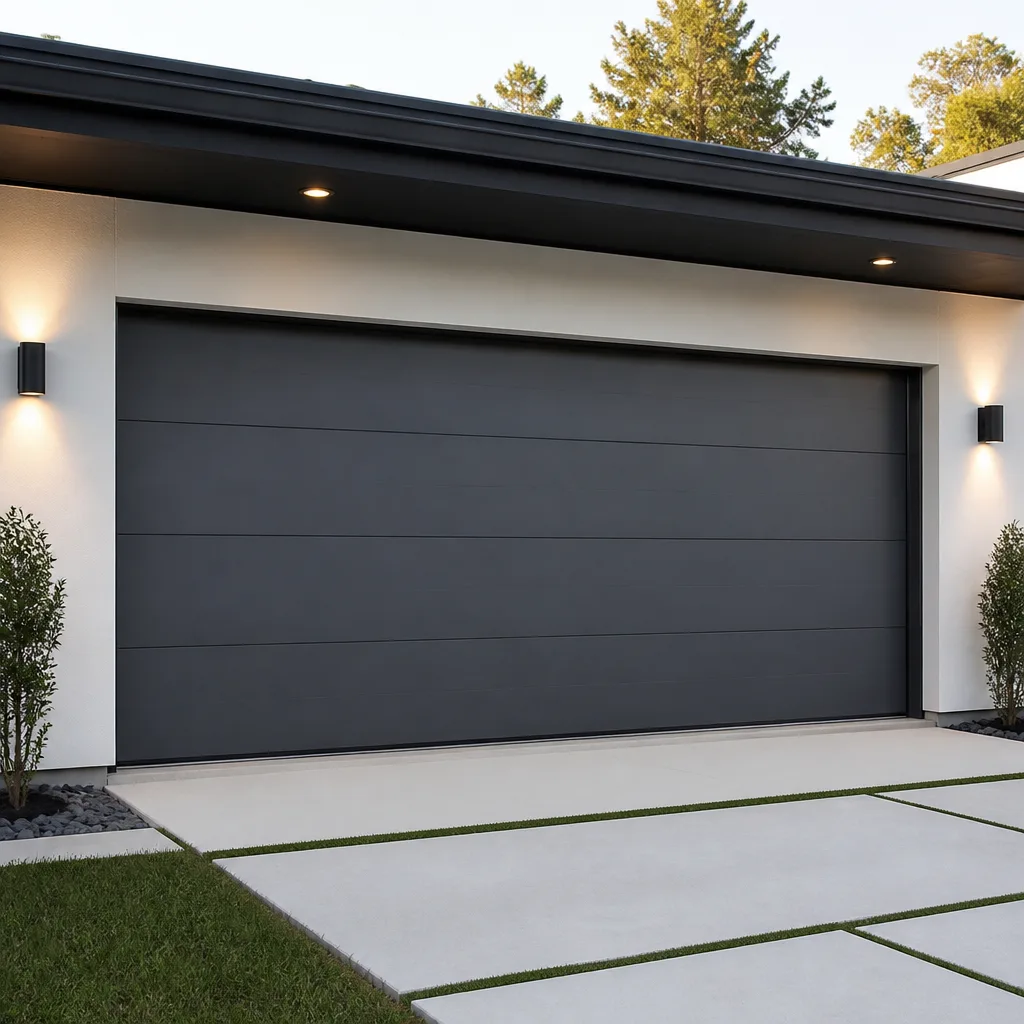 Modern flush
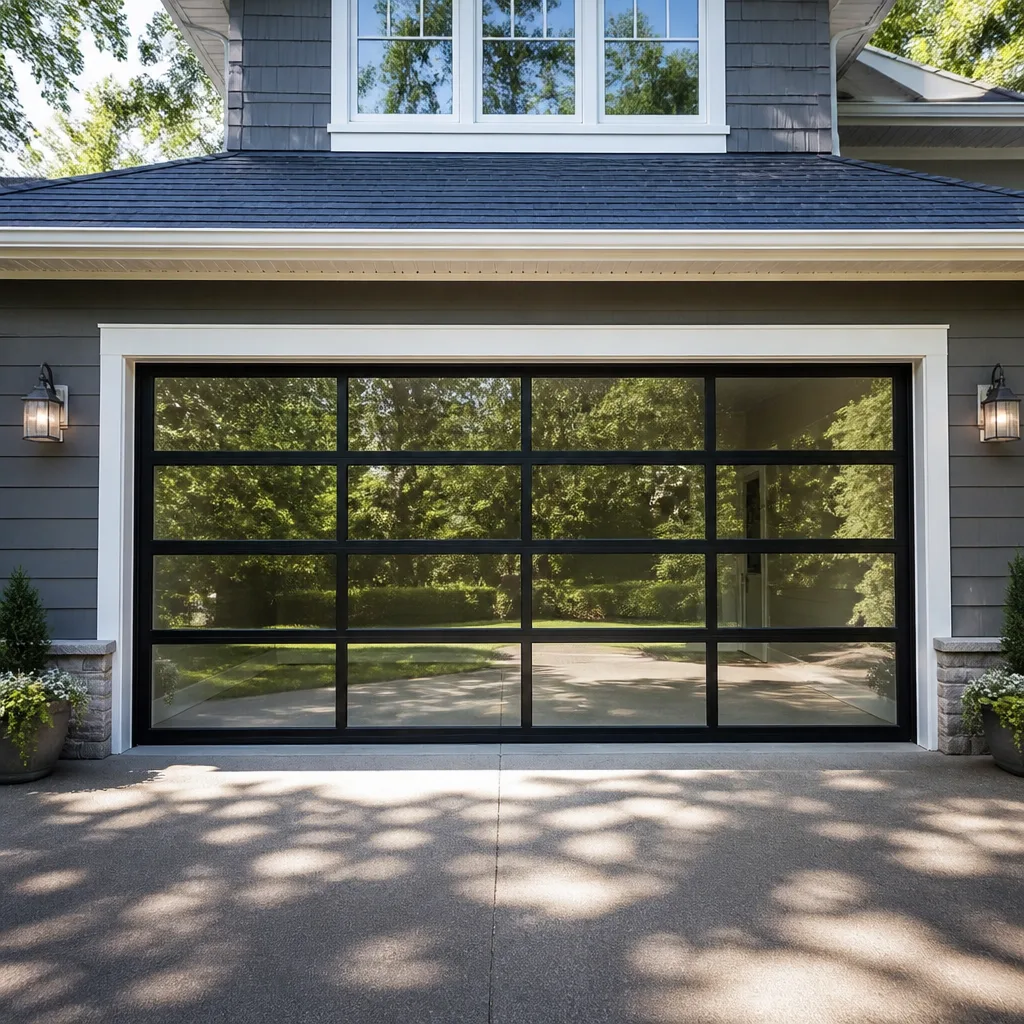 Full-view glass
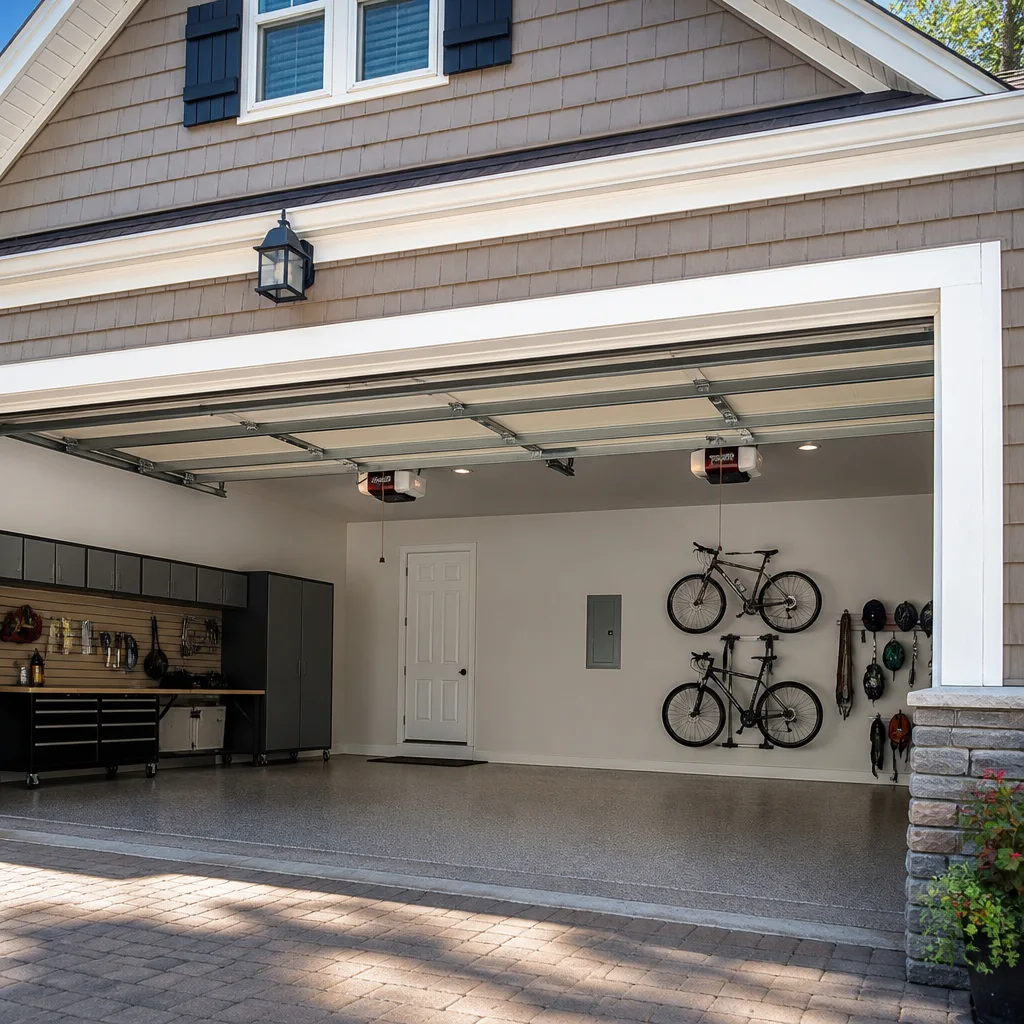 LiftMaster openers
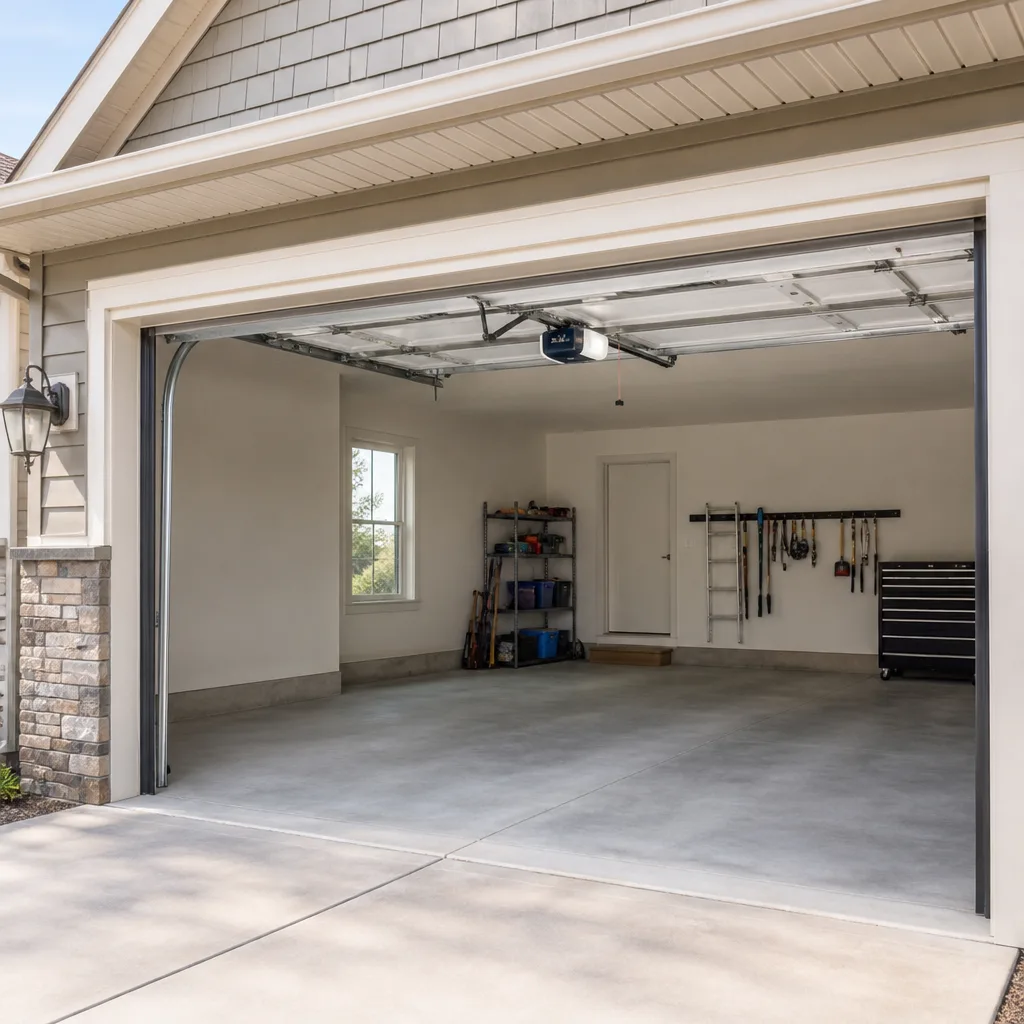 Chamberlain openers
Full 25-point door and opener safety check with every visit - springs, cables, rollers, tracks, and your LiftMaster or Chamberlain opener included
You get a price before we start. It does not change when the truck arrives.
Get your free estimateThe Complete Garage Door Repair Guide for Milpitas Homeowners
Most garage door repair guides read like they were written by someone who has never stood in a Milpitas driveway. They talk about generic springs and generic openers and generic weather, as if a garage in Arizona behaves the same as one four miles from the San Francisco Bay. It doesn’t. The majority of garage door failures we see in Milpitas aren’t random. They cluster around three predictable stress points that almost every national guide ignores because they’re local, not universal: bay humidity accelerating spring corrosion, temperature swings between the bay and the hills stressing track alignment, and the aging hardware stock in the city’s 1970s through 1990s tract home neighborhoods. This guide covers those failure patterns, walks through a component-by-component diagnostic map that works across every major brand found in local homes, and gives you the tools to know when a repair is worth doing. For more guides & resources, visit our blog.s the right call and when a 20-plus-year-old system has crossed the line into replacement territory.
Quick Answer
Garage Door Repair services in Milpitas typically cost between $125 and $400 for most common fixes like spring replacement, roller replacement, track realignment, and cable repair, while opener repairs run $150 to $350 depending on the board, gear, or motor involved. Milpitas homeowners should know that torsion spring failures are the single most common repair call in this area, driven by the bay’s salt-adjacent humidity and wide temperature swings, and these springs are genuinely dangerous to work on without proper training and tools. The fastest way to get an accurate diagnosis is a same-day inspection from a brand-agnostic technician who works across all eight major manufacturers found in Milpitas homes.
Styles & brands we work with
- Raised-panel steel
- Carriage house
- Modern flush
- Full-view glass
- LiftMaster openers
- Chamberlain openers
Table of Contents
- Why Milpitas’s Climate Creates Specific Garage Door Failures
- A Component-by-Component Diagnostic Map for Any Brand
- Torsion Springs: The Most Common Milpitas Repair, and Why It’s Not DIY
- What’s Safe to DIY in Milpitas vs. What Requires a Technician
- Repair or Replace: When a 20+ Year Old System Has Crossed the Line
- How to Read a Repair Estimate Line by Line
- Why Opener Repair Is Its Own Specialty
- Brand-Specific Failure Patterns We See in Milpitas
Why Milpitas’s Climate Creates Specific Garage Door Failures
The Complete Guide to Garage Door in Milpitas starts with a simple truth: Milpitas sits in a weather pocket that doesn’t behave like San Jose and doesn’t behave like Fremont. The bay pushes moist air inland through the Alviso corridor, and the hills to the east trap it. What this means for your garage door is simple: metal components corrode faster here than they do even ten miles south. Torsion springs on a Milpitas door in a neighborhood like Midtown or Sunnyhills will show surface rust within three to five years of installation if the garage isn’t climate-controlled. That rust doesn’t just look bad. It creates microscopic pitting on the spring coil, and that pitting becomes a stress concentration point. When the spring finally snaps, it almost always breaks at one of these corrosion points, not at a random spot along the coil.
The temperature cycling matters just as much. Milpitas regularly swings 25 to 30 degrees between overnight lows and afternoon highs, and that swing is more pronounced in areas near I-880 and the industrial corridor east of the freeway, where concrete and asphalt hold heat. Metal tracks expand and contract with every cycle. Over a decade, that’s thousands of expansion cycles pulling at the track brackets, loosening the lag bolts, and shifting the vertical track out of plumb. A door that closes fine in the morning and binds in the afternoon heat is almost always a track alignment issue caused by this thermal cycling, not a problem with the door itself.
The third factor is the housing stock. Large portions of Milpitas were built out between 1975 and 1995. Those homes often still have original garage door hardware, or hardware that was replaced once sometime in the early 2000s. That means a significant number of Milpitas garage doors are running on 20 to 40 year old springs, rollers, hinges, and tracks. The spring on a 1990-era door in the Sunnyhills area is operating well past its rated cycle life, which is typically 10,000 cycles for standard springs. At four open-and-close cycles per day, that’s about seven years. A 30 year old spring is a failure waiting to happen, and the corrosion from the bay air only accelerates the timeline.
A Component-by-Component Diagnostic Map for Any Brand
Before you call anyone, it helps to know what you’re looking at. A garage door system has seven main component groups, and most failures local homeowners experience fall into one of these categories. This map works whether you have a LiftMaster opener driving a Clopay door, a Chamberlain driving an Amarr, or a Genie paired with a Wayne Dalton. The components are the same; the failure patterns are what vary.
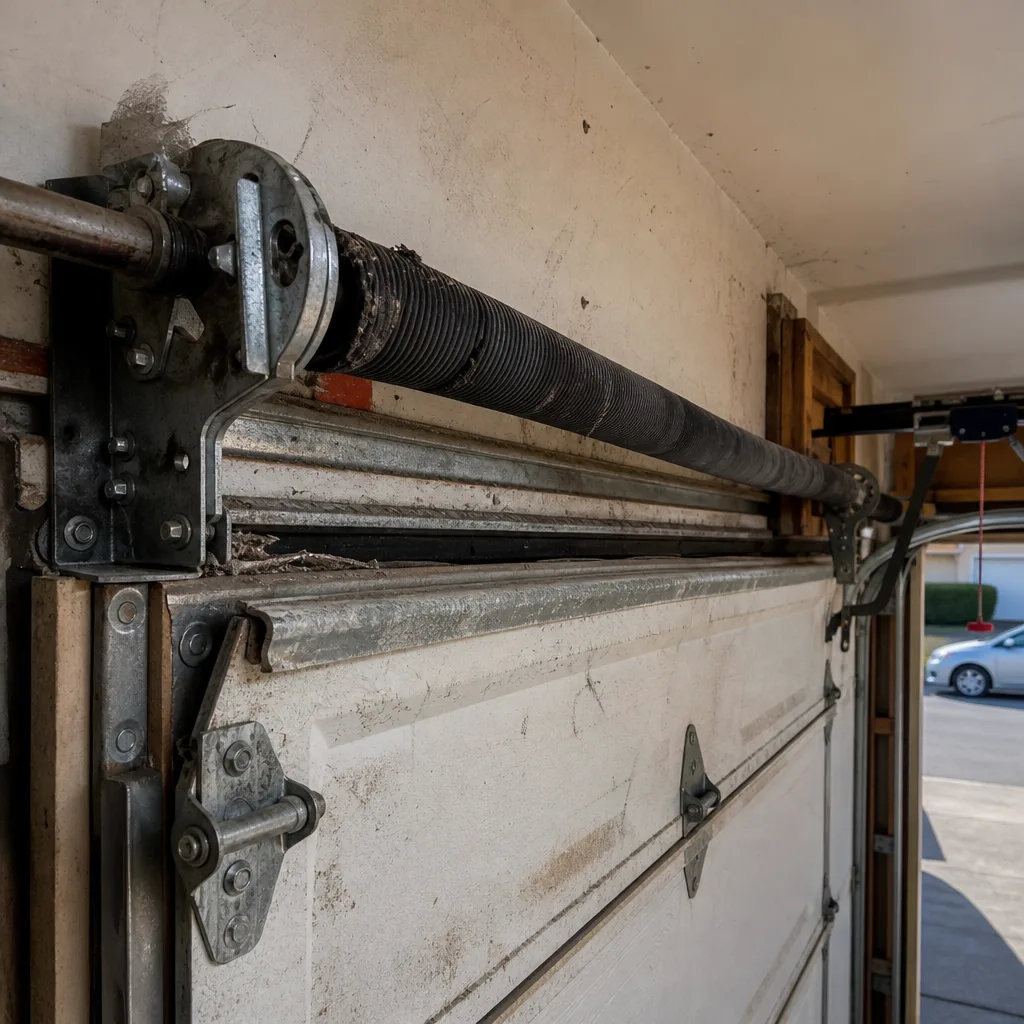
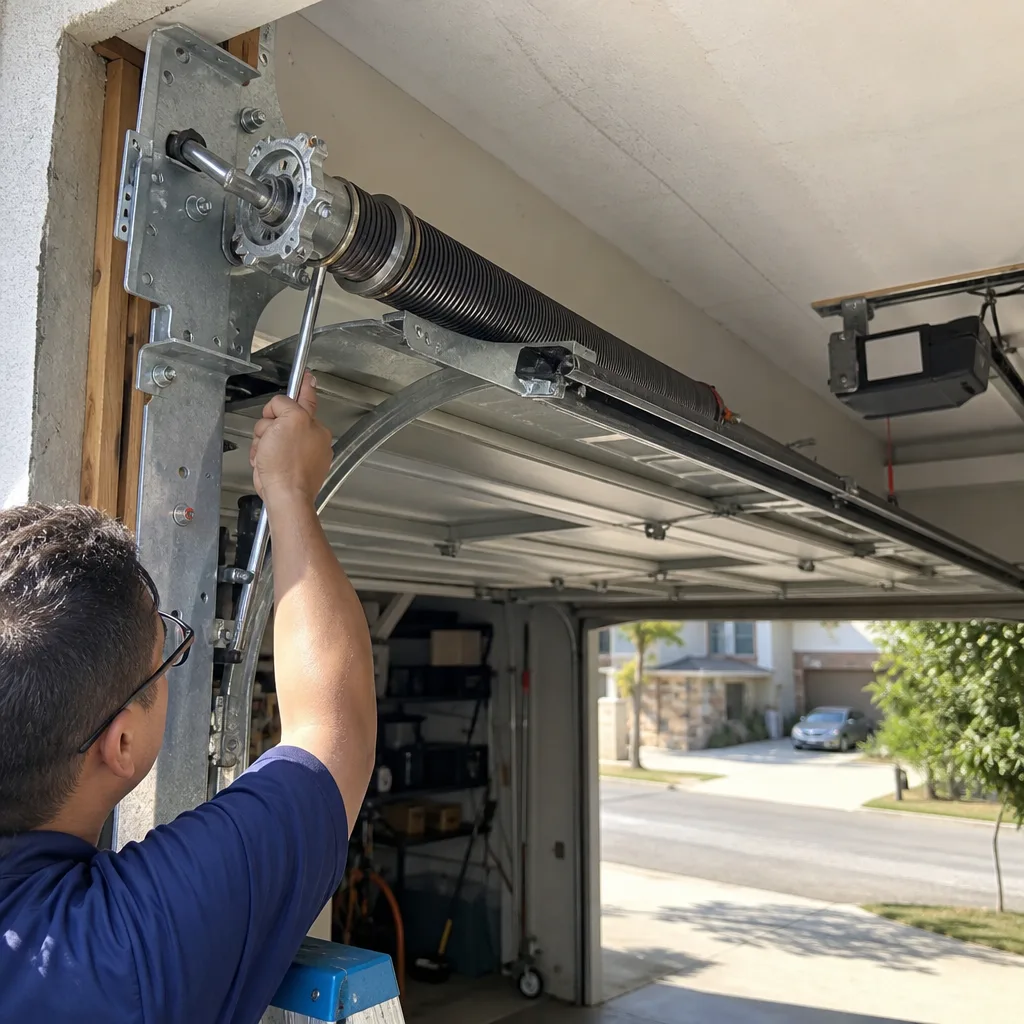
- Torsion springs – mounted on a horizontal shaft above the door opening. They counterbalance the door’s weight. When one breaks, you’ll hear a loud bang that sounds like a firecracker or a car backfiring inside the garage. The door will be extremely heavy and may not open more than a few inches, even with the opener pulling.
- Cables – the steel cables on both sides of the door that connect the bottom brackets to the spring system. Cables fray before they snap. Look for loose strands, kinks, or a cable that has jumped off the drum. A broken cable means the door will lift unevenly or bind on one side.
- Rollers – the wheels that ride in the tracks. Nylon rollers last 10 to 15 years; steel rollers last 7 to 10 and are louder. Worn rollers cause grinding noises, a door that shudders on the way up, and uneven wear on the tracks.
- Hinges – the brackets connecting door panels. Hinge failure is more common on older Milpitas doors where the hinge pins have corroded. A failing hinge will make the door flex visibly at a panel seam while moving.
- Tracks – the vertical and horizontal rails guiding the door. Milpitas-specific thermal cycling causes track brackets to work loose over time. A door that binds at a specific point during travel usually has a track misalignment, not a spring problem.
- Opener – the motor unit on the ceiling, plus the rail, belt or chain, and the logic board. Opener failures are electrical or mechanical. A humming motor that doesn’t move the door usually means a stripped drive gear. A door that won’t respond at all often points to the logic board or a sensor issue.
- Weather seal and bottom bracket – the rubber strip at the bottom of the door and the metal brackets holding the cables. A worn seal lets bay moisture into the garage, accelerating corrosion on everything else.
The most useful thing a homeowner can do before calling for service is isolate where the problem lives. Does the door work manually but not with the opener? That’s the opener. Is the door heavy when you pull the release cord? That’s springs. Does the door bind at a specific point? That’s tracks or rollers. Does it make noise only in one spot? That’s rollers or hinges. Knowing this narrows the diagnosis and means a technician can arrive with the right parts on the truck instead of spending your service call figuring out what’s wrong.
Torsion Springs: The Most Common Milpitas Repair, and Why It’s Not DIY
Torsion spring replacement is the single highest-volume repair in Milpitas. The bay-adjacent humidity corrodes springs faster than inland locations, and the temperature swings stress the metal with repeated expansion and contraction. In our experience, a standard torsion spring installed on a Milpitas door in an unconditioned garage lasts 5 to 8 years before corrosion-related fatigue sets in. That’s noticeably shorter than the 8 to 12 years you might see in a dryer climate like Livermore.
Here’s the honest assessment on DIY: a torsion spring under tension stores enough energy to cause catastrophic injury or death if it releases unexpectedly. The winding bars, the spring rating, the correct number of quarter-turns, the set screws, the cable drums – all of it has to be precise, and the consequence of getting any single step wrong is a steel bar or spring fragment moving at speed toward your face or torso. This isn’t a “watch a YouTube video and be careful” situation. It’s the one repair where even many professional handymen refer the work out. If you value your fingers and your face, this is the line where DIY stops.
A legitimate torsion spring replacement in Milpitas includes two springs, because both springs fatigue at roughly the same rate, and replacing only the broken one means you’ll be back in the same position within months when the other one fails. Expect a line item for the springs themselves, a line item for labor, and a line item for balancing and calibration after installation. The springs have a cycle-life rating – standard springs are rated for roughly 10,000 cycles, and higher-cycle springs are available at a modest upcharge. If you plan to stay in the home for more than five years, the upgrade is usually worth the extra $40 to $60 per spring. We recommend asking your technician what cycle rating the quoted springs carry. If they can’t tell you, that’s a red flag about their level of expertise.
What’s Safe to DIY in Milpitas vs. What Requires a Technician
We believe homeowners should know exactly where the line is. Some tasks are genuinely safe for a competent DIYer with basic tools. Others carry enough risk that calling a technician isn’t just easier – it’s the only responsible choice. Read DIY vs Professional Garage Door: The Milpitas Homeowner’s Decision Guide for the full breakdown. Here’s the breakdown as it applies to a typical Milpitas home.
Safe to DIY:
- Replacing the bottom weather seal. The rubber strip slides out of the bottom retainer, and a new one slides in. This is a ten-minute job with a $15 to $30 part, and it’s worth doing annually in Milpitas because a failed seal is the primary entry point for bay moisture into the garage.
- Tightening loose hinge bolts and track brackets. Use a socket wrench and check every bolt you can reach. Milpitas’s thermal cycles work these loose over time. Don’t overtighten – snug is enough on track brackets, and overtightening can bend the track.
- Lubricating rollers, hinges, and the spring. Use a silicone-based garage door lubricant, not WD-40. Apply to the roller bearings, hinge pivot points, and along the torsion spring coil. Do this twice a year, and you’ll measurably extend component life in Milpitas’s corrosive air.
- Checking and cleaning the safety sensors. The photo-eye sensors near the bottom of the track get dusty and misaligned. Wipe the lenses and check that both lights are solid. If one is blinking, gently adjust the sensor until it lines up with the other.
Do not DIY – call a technician:
- Torsion spring replacement. Covered above. This is a hard no for DIY, full stop.
- Cable replacement. The cables are under spring tension. Removing them without first unwinding the spring is exactly how people get hurt. This job requires the same winding bars and training as spring work.
- Track realignment. On the surface this looks like loosening bolts and nudging the track. In practice, it requires checking the door’s balance, the spring tension, and the cable alignment in a specific order. Getting it wrong makes a binding door worse.
- Opener logic board or motor replacement. The high-voltage capacitor in an opener motor can hold a charge even after the unit is unplugged. Unless you have electrical training, don’t open the motor housing.
- Any repair involving a door that’s stuck open or partially open. A door stuck in the open position has a failed spring, a failed cable, or both, and the entire system is under uncontrolled tension. This is the most dangerous state a garage door can be in, and it’s the one situation where we tell homeowners to step away and call immediately.
For the jobs in the safe column, go for it. For everything else, garage door repair in Milpitas is a phone call away, and a trained technician can handle the dangerous work without you having to think about it twice.
Repair or Replace: When a 20+ Year Old System Has Crossed the Line
Milpitas has a lot of homes from the 1970s, 80s, and 90s, and a meaningful percentage of them still run on original or near-original hardware. The question homeowners ask us most often isn’t “what’s wrong with my door” – it’s “is this worth fixing.” Here’s an honest framework for making that call.
Add up the repair costs you’ve had in the last three years. If the total approaches 50% of the cost of a new door, replacement starts to make financial sense. A new quality garage door in Milpitas, installed, typically runs between $1,200 and $3,500 depending on size, material, insulation, and brand. If your repairs over three years total $1,500 and you’re looking at another $400 now, you’re at the threshold where continued repair is throwing money at a system that has entered cascade-failure territory.
Look at the panel condition. If the panels on a Clopay or Amarr door are rusting through from the inside – and we see this regularly in Milpitas garages without climate control – no amount of hardware replacement will fix the structural decline. The panels are the door. If they’re corroded, the system is done.
Check the opener. A door from 1995 paired with an opener from 2015 is still worth repairing at the door level, because the opener has plenty of life left. But a door from 1995 paired with a 1995 opener is a different story. Both components are at end-of-life, and the next major failure will likely cascade. You’re better off addressing them together with a new installation.
The insulation question matters in Milpitas. Uninsulated steel doors from the tract-home era lose enormous amounts of conditioned air, especially in the summer when the hills trap heat. If you’re repairing a 25 year old uninsulated door anyway, the incremental cost of replacing with an insulated door – usually $300 to $600 more than another year of patch repairs – may solve multiple problems at once. We don’t push replacement when a repair will do. But when a door has hit the end of its service life, saying so plainly is the honest answer. For a deeper look at the numbers, see our piece on garage door installation in Milpitas.
How to Read a Repair Estimate Line by Line
There are two fears every Milpitas homeowner has when the garage door breaks. The first is the breakdown itself. The second is an invoice bigger than the quote. Here’s what a legitimate repair estimate includes, line by line, and the upsell patterns you should recognize and push back on.
A legitimate estimate includes:
- Diagnostic fee (or waived diagnostic). Some companies charge a trip charge, usually $50 to $100, which is then credited toward the repair. Others offer free diagnostics. Both are normal business models. What matters is that the fee is disclosed before the technician arrives, not surfaced on the final invoice.
- Parts, itemized. Each spring, roller, hinge, cable, bracket, or board should carry its own line item with a specific price. “Parts: $250” without detail means you can’t verify anything.
- Labor, itemized by job. Spring replacement should be a separate labor line from roller replacement. This lets you compare apples to apples if you get a second quote.
- Tax and any disposal fees. Disposal of an old door or old springs is a real cost. It should be listed transparently, not folded into the labor line.
- The total, written, before work begins. Every reputable shop in Milpitas quotes and gets sign-off before opening the truck. A technician who starts work without a written number is not someone you want working on your house.
Upsell patterns to recognize:
- The “everything is dangerous” pitch. A technician who claims every component of your door needs urgent replacement, especially on a door you’ve had no prior problems with, is selling fear. Dangerous components are springs and cables under tension. Rollers, hinges, and sensors are not urgent-safety items.
- The mystery brand upgrade. If a tech tells you they only work on one brand, or that your existing Wayne Dalton or Raynor door “isn’t worth working on” and pushes a full replacement, that’s a single-brand shop protecting its product line. A brand-agnostic operation can source parts for any of the major manufacturers. Eight brands, one call.
- The spring life baloney. Some technicians will tell you standard springs only last 3 to 4 years to justify replacement of springs that are actually fine. Standard springs last 7 to 10 years depending on usage and climate. In Milpitas, the corrosion factor shortens that to 5 to 8, but not 3.
- The “while I’m here” bundle. “While I’m here, I can replace all your rollers, your hinges, and your weather seal for just $400 more.” Sometimes this is legitimate – worn rollers are common on 20 year old Milpitas doors. But the price should reflect actual wear. Ask the technician to show you the wear before you approve the work.
The single most important rule: never sign a blank or partial invoice. The full amount, broken down, agreed before work starts. Every legitimate shop we know in Milpitas operates this way, and so do we.
Why Opener Repair Is Its Own Specialty
Most garage door repair companies treat the opener as an afterthought. A spring snaps, they replace the spring. A cable frays, they replace the cable. And when the opener fails, they say “you need a new opener” and box-replace it. That approach costs Milpitas homeowners hundreds of dollars in unnecessary replacements every year.
Opener repair is its own specialty because the opener is the most electronically complex component of any garage door system. A LiftMaster or Chamberlain opener from the last decade contains a logic board that manages motor control, safety sensor input, travel limits, obstacle detection, and wireless protocol handshakes with your remotes and keypads. A Genie opener uses a different board architecture. A Craftsman opener from the 1990s uses a completely different gear set and drive mechanism than anything manufactured today. Diagnosing these systems requires someone who understands the failure patterns specific to each manufacturer and each generation.
The most common opener repairs we perform in Milpitas are:
- Stripped drive gears – common on Chain-drive LiftMaster and Chamberlain units from the 2000s, where the nylon gear wears out and the motor spins without moving the chain.
- Logic board failures – common on Genie units after power surges, which happen more often in Milpitas than homeowners realize, especially in neighborhoods near the industrial corridor where grid load fluctuates.
- Travel limit drift – common on Chamberlain and Craftsman units where the limit switches lose calibration over time, causing the door to reverse before closing or slam into the ground.
- Sensor wiring faults – common on all brands in Milpitas because garage temperature swings cause wire insulation to crack over time, creating intermittent open circuits that mimic logic board failure.
None of these require a new opener. All of them require a technician who can diagnose down to the specific component and has the right board, gear, or sensor on the truck. Our team handles garage door opener repair in Milpitas as a dedicated specialty, not a sideline, and we stock parts across all major brands. Diagnosed right the first time means you’re not paying for three visits to chase an intermittent fault.
Brand-Specific Failure Patterns We See in Milpitas
Because Milpitas homes span several decades of construction, the brand mix on the ground is diverse. We work on all of them, and certain patterns repeat often enough to be worth knowing.
Wayne Dalton doors from the 1990s and early 2000s are common in Milpitas tract homes, and their signature failure point is the TorqueMaster spring system, which encloses the springs inside a tube. Most technicians without Wayne Dalton training will tell you the whole system needs replacement when the springs fail. In reality, the internal springs can be replaced while keeping the existing tube and hardware. That’s a $200 repair quote on a door that other shops would push toward a $1,500 replacement. No replacement pitch if a repair will do.
Amarr doors are among the most durable in the Milpitas climate because their panel construction resists the bay-area corrosion better than most. The weak point is usually the hardware layer – hinges, rollers, and brackets – rather than the panels themselves. We see Amarr doors from 2005 that are structurally perfect but running on completely worn rollers. The repair is straightforward and cheap, but it gets missed by technicians who only look at panels and springs.
Craftsman openers are still running in a surprising number of Milpitas garages from the 1990s. The motor units are tanks, but the drive gears were never designed for a 25 year service life. If your Craftsman opener makes a grinding noise but the door doesn’t move, that’s almost certainly a stripped gear, and it’s a sub-$150 repair on a unit that will otherwise keep running for years. We’d rather fix the gear than sell you an opener you don’t need, especially when the door itself is fine.
Raynor doors are rare in Milpitas but present in some of the higher-end homes built in the 2000s and 2010s. They share many components with Clopay doors, which means sourcing parts is rarely an issue for a shop that stocks both. The failure pattern we see is mostly cosmetic – panel fading from sun exposure on south-facing garages – rather than mechanical. We’re happy to assess a Raynor door and give an honest read on whether the mechanicals are worth preserving.
The broader point: your existing brand is the starting point. A technician’s job is to know your system, not to replace it with something they prefer to sell. That’s the difference between working on your brand and selling you one. If you want to see the full scope of what we handle, our Milpitas garage door service covers eight major manufacturers without a bias toward any of them.
Common Mistakes to Avoid
- Ignoring the first weird noise. A garage door that starts making a new sound is communicating a problem in its earliest stage. In Milpitas, that early-stage problem is often corrosion accelerating fast enough that waiting six months turns a $150 roller replacement into a $400 track and spring repair. The door won’t fix itself, and bay air doesn’t wait.
- Using WD-40 on the tracks. WD-40 is a solvent, not a lubricant, and it attracts dust that becomes a gritty paste inside the track. Use silicone spray on rollers and hinges, and leave the tracks dry. This single habit change extends component life measurably in humid air.
- Replacing only one spring. Torsion springs are installed in pairs and fatigue at the same rate. Replacing one saves $100 today and costs you a second service call within six months. Replace both, and ask your technician what cycle rating the new springs carry.
- Pulling the emergency release cord while the door is open. The release cord exists for one purpose: disconnecting the opener so you can operate the door manually during a power outage. Pulling it while the door is up, with a broken spring or cable, releases the door’s full weight with nothing to control it. The door can come down fast enough to injure anyone standing underneath.
- Accepting a quote without a line-item breakdown. “Total: $650” tells you nothing about what’s being repaired, what parts are going in, or whether you’re being charged for work that isn’t necessary. If a Milpitas technician won’t itemize, find one who will. The good ones always do.
- Waiting until the door stops working entirely to call. By the time a door won’t open, a small problem has become a structural one. Repairs are cheaper, faster, and more predictable when caught early. Milpitas’s climate means small problems become big ones faster than in dry inland areas.
- Assuming all garage door companies work on all brands. Many shops specialize in one or two manufacturers. If you have a Genie opener and the technician only works on LiftMaster, you’re getting a replacement pitch, not a repair. Always ask upfront whether the company services your specific brand before scheduling.
See the difference
 Before
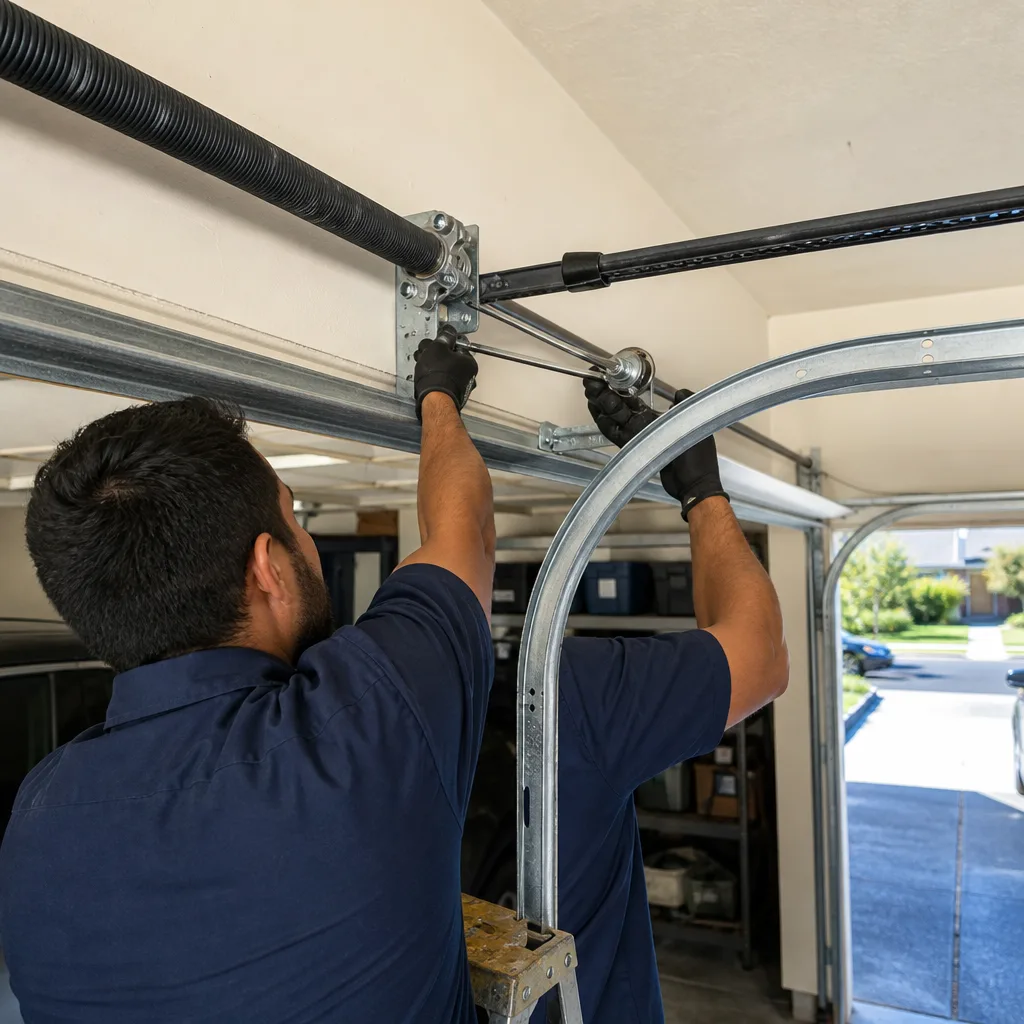 After
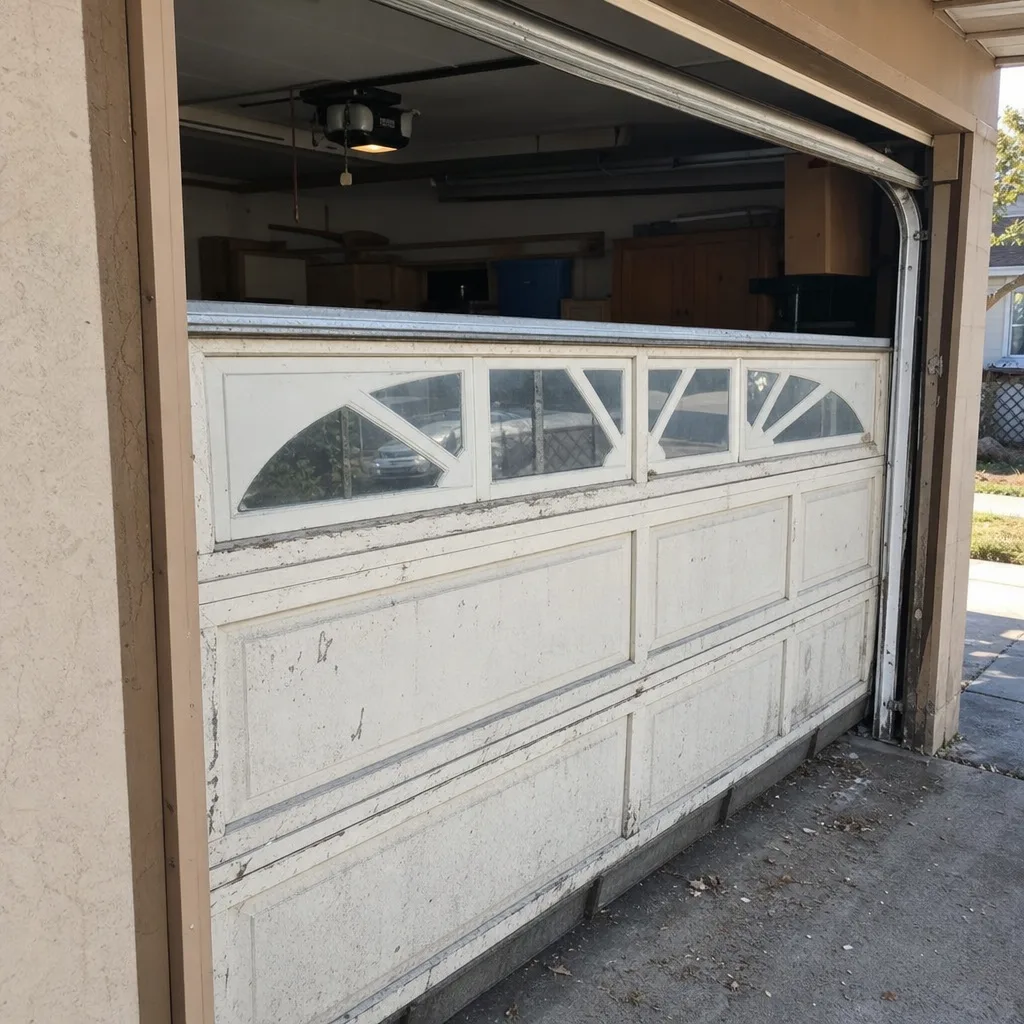 Before
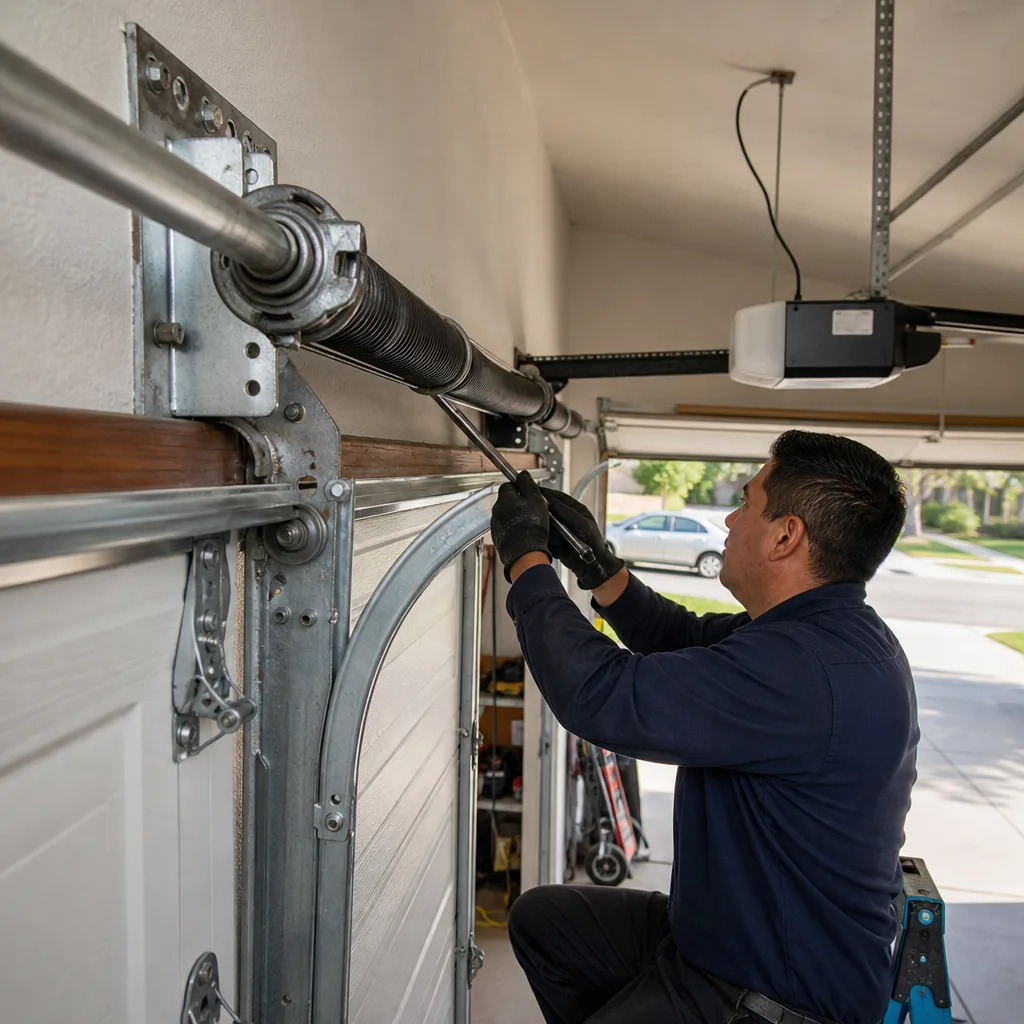 After
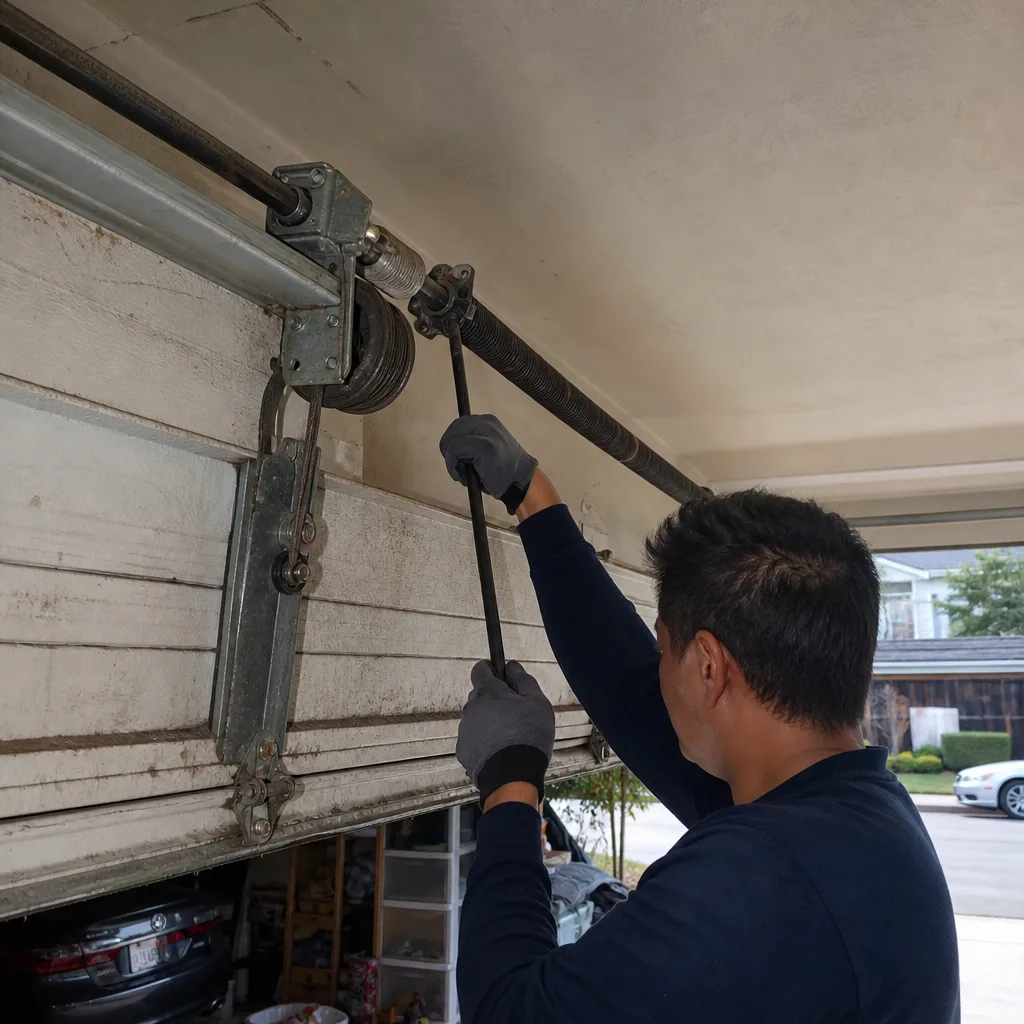 Before
 After
When to Call a Professional
Call a professional when the problem involves any component under spring or cable tension. Call when the door is stuck open or partially open and won’t move under its own power. Call when the opener makes grinding noises, smells like burning plastic, or responds erratically to remotes and wall buttons. Call when you’ve tried the safe DIY items – weather seal, lubrication, sensor cleaning, bolt tightening – and the problem persists. Call when the door is 20 years old or more and you’re no longer sure whether repair money is well-spent. And call when you want a diagnosis from someone who works on every major brand and has no incentive to recommend one over another. Garage Door Service Milpitas offers free estimates in Milpitas – call (833) 589-9493 and we’ll give you an honest read on the door you already own.
Frequently Asked Questions
A torsion spring replacement in Milpitas typically costs $180 to $340 for both springs, including parts, labor, and balancing, with higher-cycle springs adding $40 to $60 per spring. Bay-area humidity shortens standard spring life to roughly 5 to 8 years here, which is why spring replacement is the most common repair in the area. Call (833) 589-9493 for an exact quote on your door – estimates are free, and the price is agreed before any work begins.
Most spring, roller, hinge, and cable repairs can be completed in a single visit to a Milpitas home, because a well-equipped truck carries common parts across all major brands. Opener board or gear replacements may require a second visit if a specific part must be sourced, but the diagnosis is done on the first call. If your door is stuck and you need repair service today, call (833) 589-9493 and we’ll tell you honestly whether same-day service is possible for your specific situation.
No. The quote we give after diagnosis is the price you pay, and it’s presented in writing before any work starts. If additional problems are discovered during the repair that weren’t visible during diagnosis, we stop and show you exactly what we found before doing anything further. You’re never committed to unapproved work, and no legitimate Milpitas shop operates any other way.
We stock parts across all eight brands we service – LiftMaster, Chamberlain, Genie, Clopay, Amarr, Wayne Dalton, Craftsman, and Raynor – which means most common repairs on Milpitas doors are completed in one visit. If your door is a Wayne Dalton with the enclosed TorqueMaster spring system, a less specialized shop might tell you the whole assembly needs replacement. We carry the internal replacement springs and can repair the system without replacing the tube and hardware. Call (833) 589-9493 and tell us your brand before we dispatch – that way we can confirm the right parts are on the truck.
A quality steel garage door in Milpitas lasts 15 to 30 years depending on construction, insulation, and how consistently it’s maintained, but the mechanical components – springs, rollers, cables, and hinges – wear out on a much shorter timeline of 5 to 12 years. The bay’s humidity and the city’s temperature swings accelerate metal fatigue compared to inland areas, which is why we recommend twice-yearly lubrication and a full inspection every 2 to 3 years for Milpitas doors. A 20 year old door with solid panels but worn hardware is usually worth repairing, not replacing.
Yes, if the repair is a $150 gear replacement or a $200 logic board and the opener’s motor and rail are otherwise sound – and we still see plenty of 20 year old Craftsman and LiftMaster units in Milpitas that run great after a component swap. No, if the opener has multiple simultaneous failures, a burned motor, or if the door itself is also at end-of-life and you’re better off replacing the assembled system. We’ll give you the honest math either way – no replacement pitch if a repair will do.
The Bottom Line
Milpitas garage doors fail in predictable ways: bay humidity corrodes springs faster than inland locations, temperature swings work tracks out of alignment, and the city’s 1970s-to-1990s housing stock means many systems are running on components decades past their rated life. The good news is that knowing these patterns makes repair decisions simpler. Use the diagnostic map to isolate the problem before you call. Respect the hard line between safe DIY and dangerous spring work. Read every estimate line by line, and never accept work without a written number agreed in advance. Your existing door, whatever brand it is, deserves a diagnosis based on its actual condition – not a pitch to replace it with something more convenient to sell. Eight brands, one call. If you’re in Milpitas and your garage door needs a straight answer, we’re glad to take the call. Reach us at (833) 589-9493 for a free estimate.
Written by the team at Garage Door Service Milpitas, serving Milpitas since 2011.