
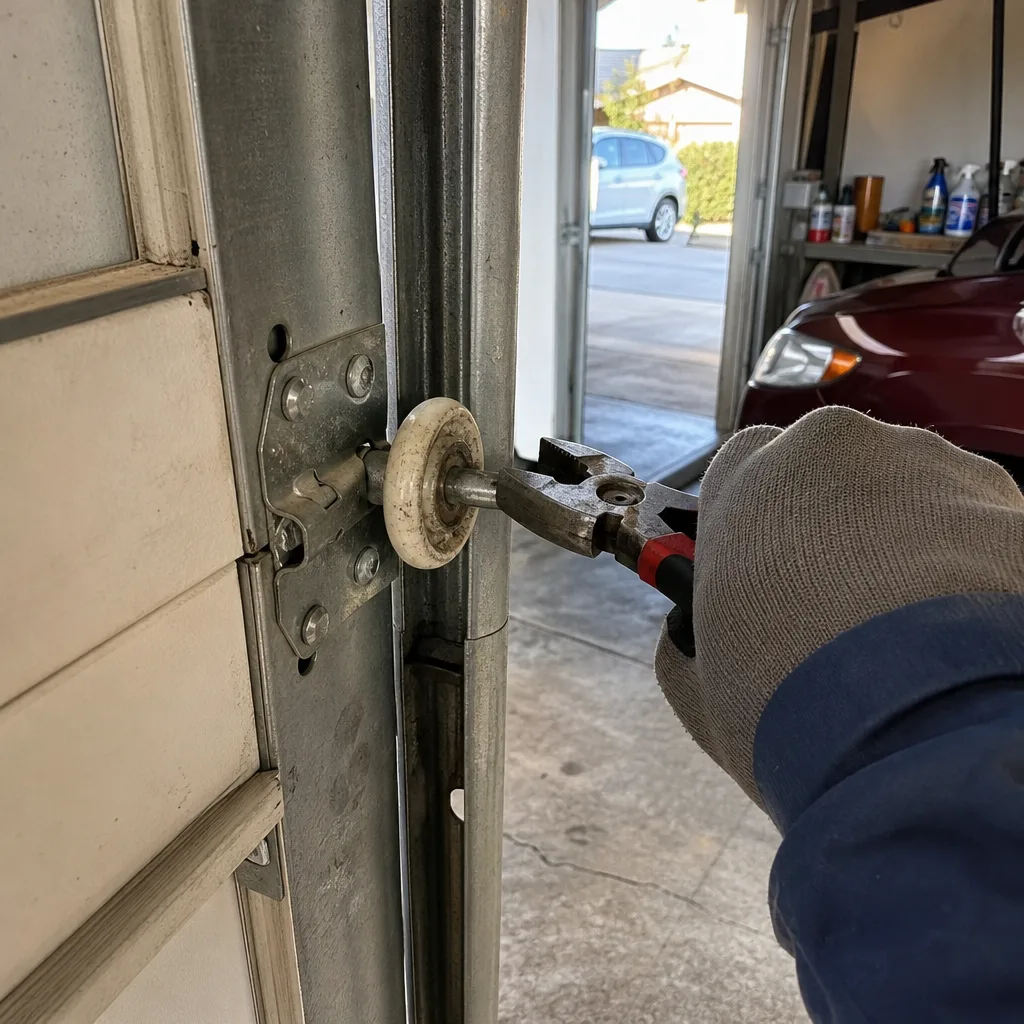
Last updated November 3, 2026
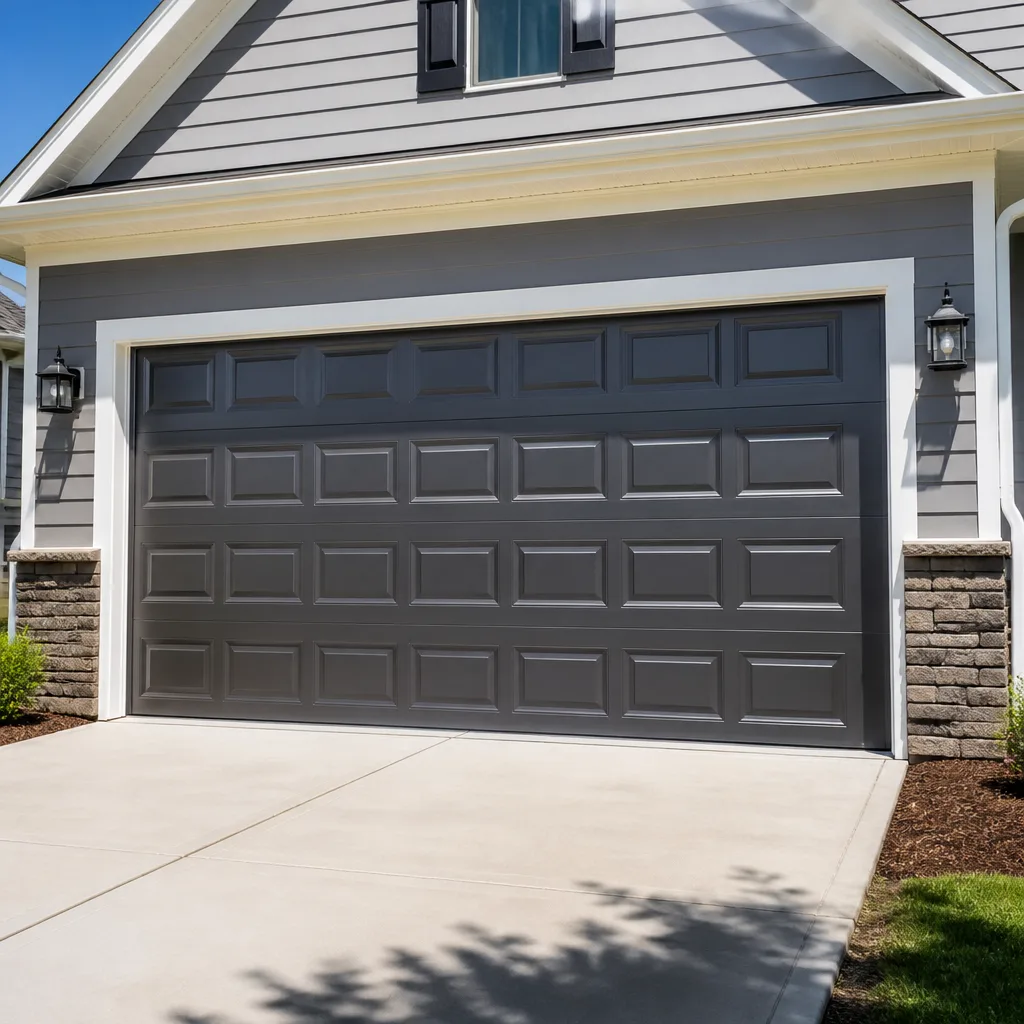 Raised-panel steel
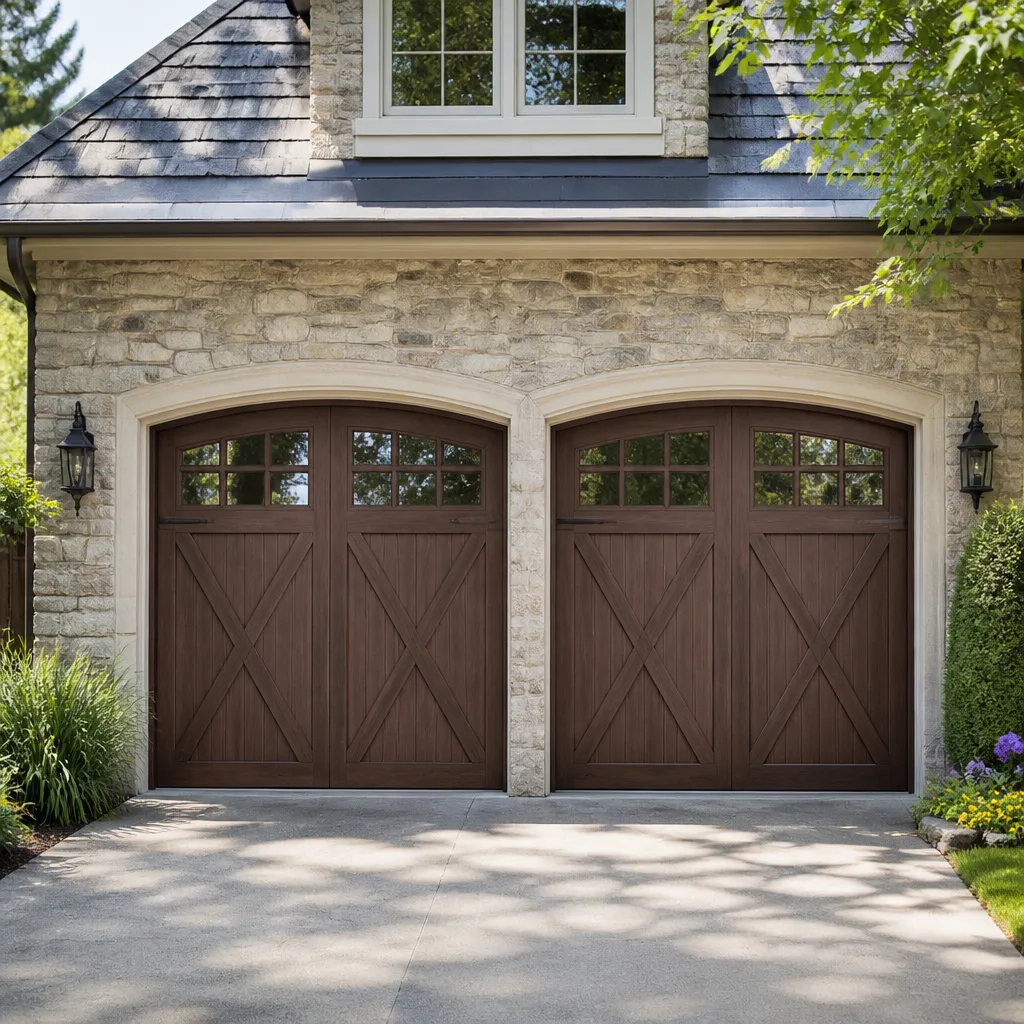 Carriage house
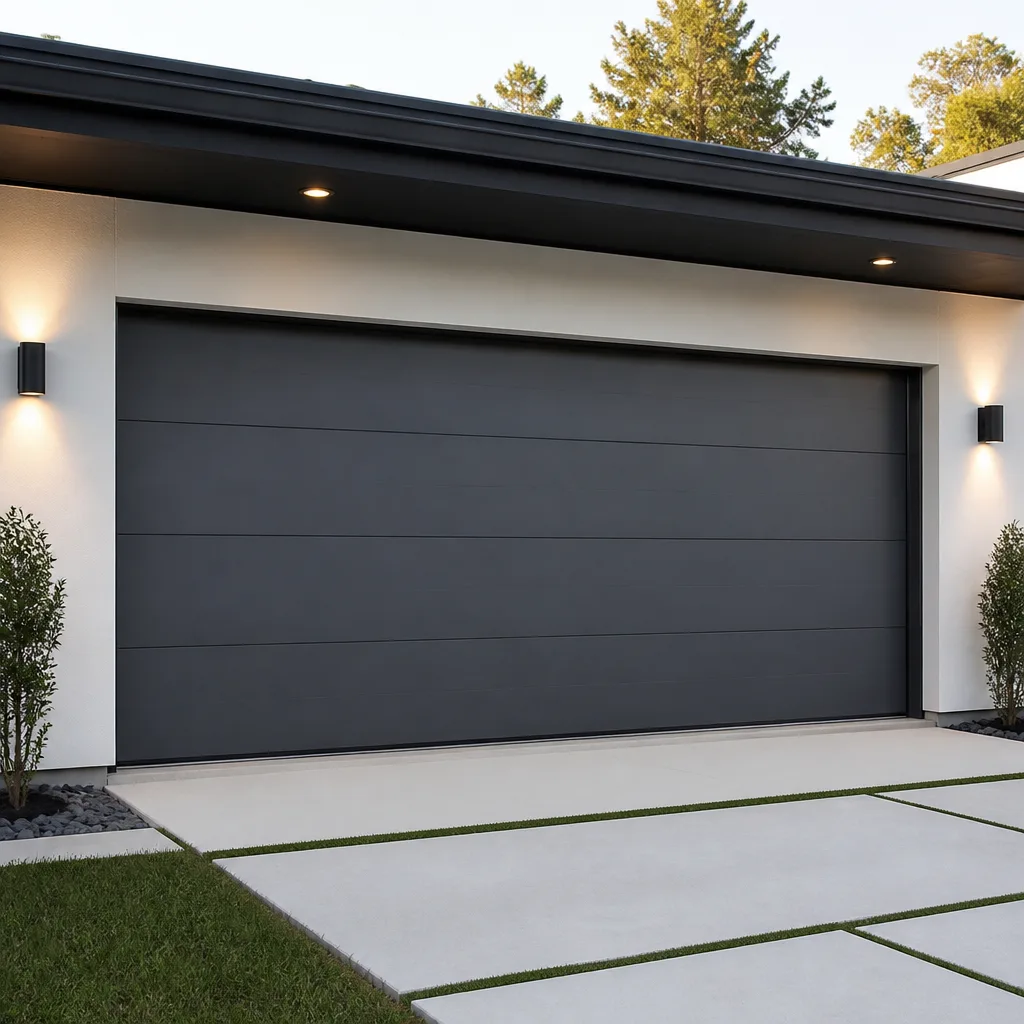 Modern flush
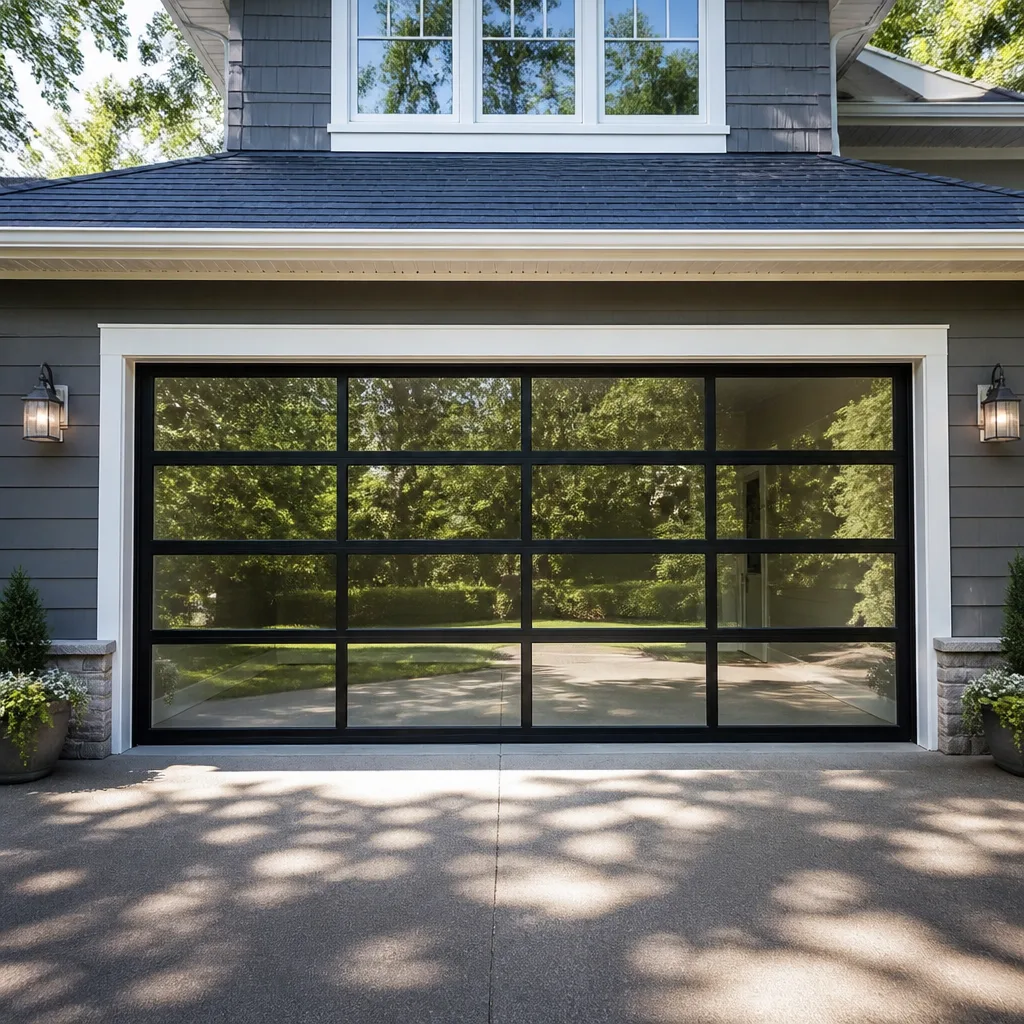 Full-view glass
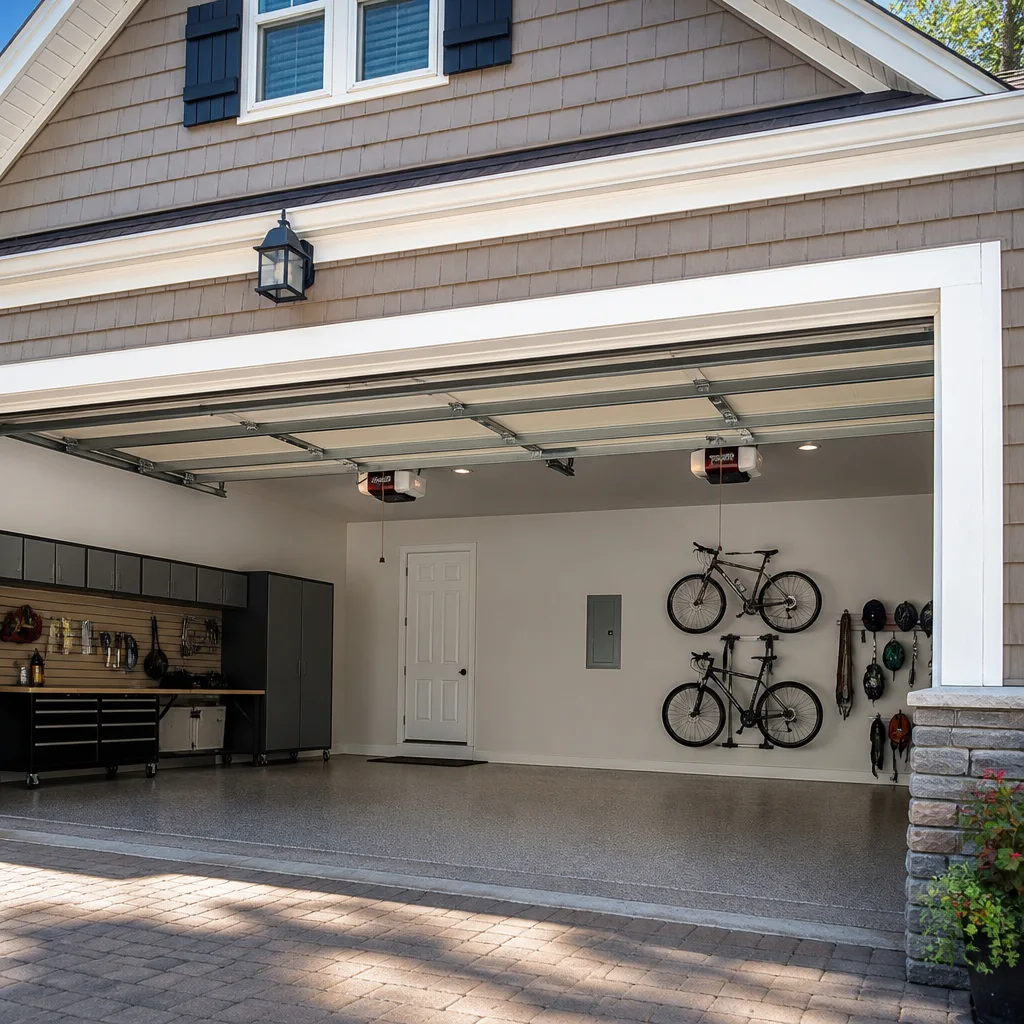 LiftMaster openers
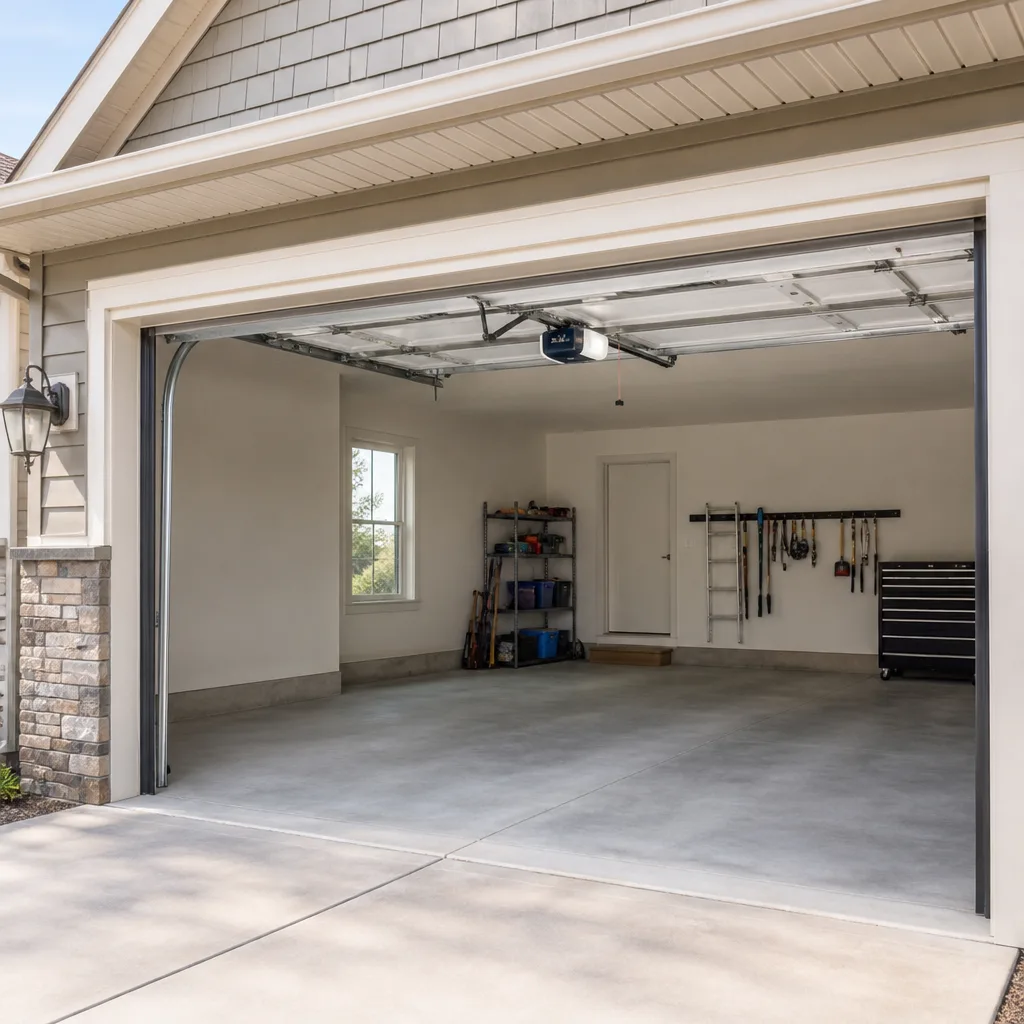 Chamberlain openers
Full 25-point door and opener safety check with every visit - springs, cables, rollers, tracks, and your LiftMaster or Chamberlain opener included
You get a price before we start. It does not change when the truck arrives.
Get your free estimateSeasonal Garage Door Care for Milpitas: Year-Round Homeowner’s Guide
The most common time for garage door spring failures in the South Bay isn’t winter. It’s the three-week window in late October when overnight temperatures drop 20°F faster than most homeowners expect, contracting metal that hasn’t been serviced since spring. Milpitas homeowners who understand this pattern avoid most emergency calls. What follows is a maintenance framework built around how this specific climate actually stresses garage door systems, drawn from our complete guide to garage doors in Milpitas rather than a generic checklist copied from a national blog. You’ll learn the four stress cycles Milpitas doors face every year, what to inspect during each one, and which tasks genuinely prevent breakdowns versus which ones waste a Saturday.
Styles & brands we work with
- Raised-panel steel
- Carriage house
- Modern flush
- Full-view glass
- LiftMaster openers
- Chamberlain openers
Quick Answer
Seasonal garage door maintenance in Milpitas means servicing your door four times a year: lubricating and inspecting springs in spring, checking panel expansion and opener motor strain through summer, re-lubricating and tightening hardware during October and November’s rapid cooldown, and addressing track corrosion and weatherstripping before and during winter rains. Each season targets a specific failure mode driven by Milpitas’s temperature swings, fog patterns, and wildfire smoke, not snow or humidity. Fifteen minutes per season prevents the majority of spring failures and opener burnout we see across Milpitas.
Table of Contents
- The Four Milpitas Stress Cycles (Not Four Seasons)
- Spring: Fog, Moisture, and the Post-Rain Checklist
- Summer: Heat Expansion and Panel Stress
- Wildfire Smoke Season: The Opener Filter Problem Nobody Talks About
- Fall: The Rapid-Cooldown Spring Failure Window
- Winter: Rain, Track Corrosion, and Seal Maintenance
- Lubrication Viscosity: Why Your Grease Fails in January
- Weatherstripping in a UV-Heavy, Low-Humidity Climate
- The 15-Minute Seasonal Checklist
- Common Mistakes to Avoid
- When to Call a Professional
- Frequently Asked Questions
- The Bottom Line
The Four Milpitas Stress Cycles (Not Four Seasons)
Milpitas doesn’t have four textbook seasons, but it does have four distinct stress cycles for garage door systems, and they’re driven by temperature swing, fog frequency, and wildfire smoke, not snow or humidity. Understanding these cycles is the difference between a door that runs for 15 years without major work and one that eats a spring every three years. Here’s what actually happens to steel, aluminum, and polyurethane in this climate.
Cycle One: The Fog Drip (March through May). Morning fog off the bay condenses on cold metal surfaces. Your tracks, hinges, and springs collect moisture that sits for hours before burning off. This isn’t a soak, it’s a persistent micro-moisture environment that accelerates surface rust on uncoated or worn hardware. The mechanical stress is minor. The corrosion stress is real and cumulative.
Cycle Two: The Thermal Expansion Grind (June through September). Milpitas regularly sees daytime highs in the 80s and 90s with overnight lows 25 to 35 degrees cooler. Steel panels expand measurably in direct afternoon sun, especially on west-facing doors. The expansion and contraction cycle flexes every joint, hinge, and panel seam. Screws that were tight in March work loose by August. Doors that ran quietly in spring develop rattles and scraping by late summer.
Cycle Three: The Rapid Cooldown Snap (October through November). This is the one that breaks springs. Torsion springs are rated for a certain number of cycles, but they fatigue faster when temperature swings are abrupt and sustained. A 20-degree overnight drop contracts the spring coil faster than the mounting hardware, concentrating stress at the winding cone. If the spring is more than seven years old and hasn’t been lubricated since spring, the snap point is often one cold November morning when the door is first opened.
Cycle Four: The Rainy Season Creep (December through February). Winter rain in Milpitas is sporadic, but when it comes, it’s often wind-driven and horizontal. Water gets into places it never touches during the dry months. Track brackets accumulate grit and water, creating a grinding paste that accelerates roller wear. Bottom seals that were brittle from summer UV exposure crack and let water under the door. Hinges that were dry and squeaky in October are now wet and squeaky, the worst combination for metal-on-metal wear.
Each cycle demands a specific set of actions. What works in April does nothing in September. This guide is organized around that reality. If you’re dealing with an active failure rather than preventive care, you can reach Garage Door Repair in Milpitas for same-day service.
Spring: Fog, Moisture, and the Post-Rain Checklist
Spring in Milpitas is the cleanup shift. The winter rains have stopped, but their damage is done and only now becomes visible. Morning fog compounds the issue by keeping everything damp for weeks, even after the rain is gone. This is not the time to aggressively re-lubricate everything, though many homeowners do exactly that. It is the time to inspect for rust, tightness, and seal integrity before the dry heat of summer bakes every problem into place.
What to inspect in spring:
- Track rust and pitting. Surface rust on galvanized track is normal after a wet winter. Pitting is not. Run a fingertip along the inside of the track. If it catches, the roller is running over a rough surface that will chew through ball bearings by summer. Minor rust comes off with steel wool. Pitted track needs replacement.
- Bottom seal condition. The rubber flap along the bottom of your door took the brunt of winter rain. Look for cracks, flattening, or separation from the aluminum retainer. If you can see daylight under any section of the closed door, the seal has failed and needs replacement before summer dust and fall smoke start getting in.
- Hinge bolt tightness. The expansion and contraction of winter cold snaps plus spring warming works hinge bolts loose over time. A 3/8-inch ratchet or wrench on every hinge takes five minutes. Snug them down. Don’t over-torque. If a hinge bolt keeps working loose, the hinge itself may be worn and in need of replacement.
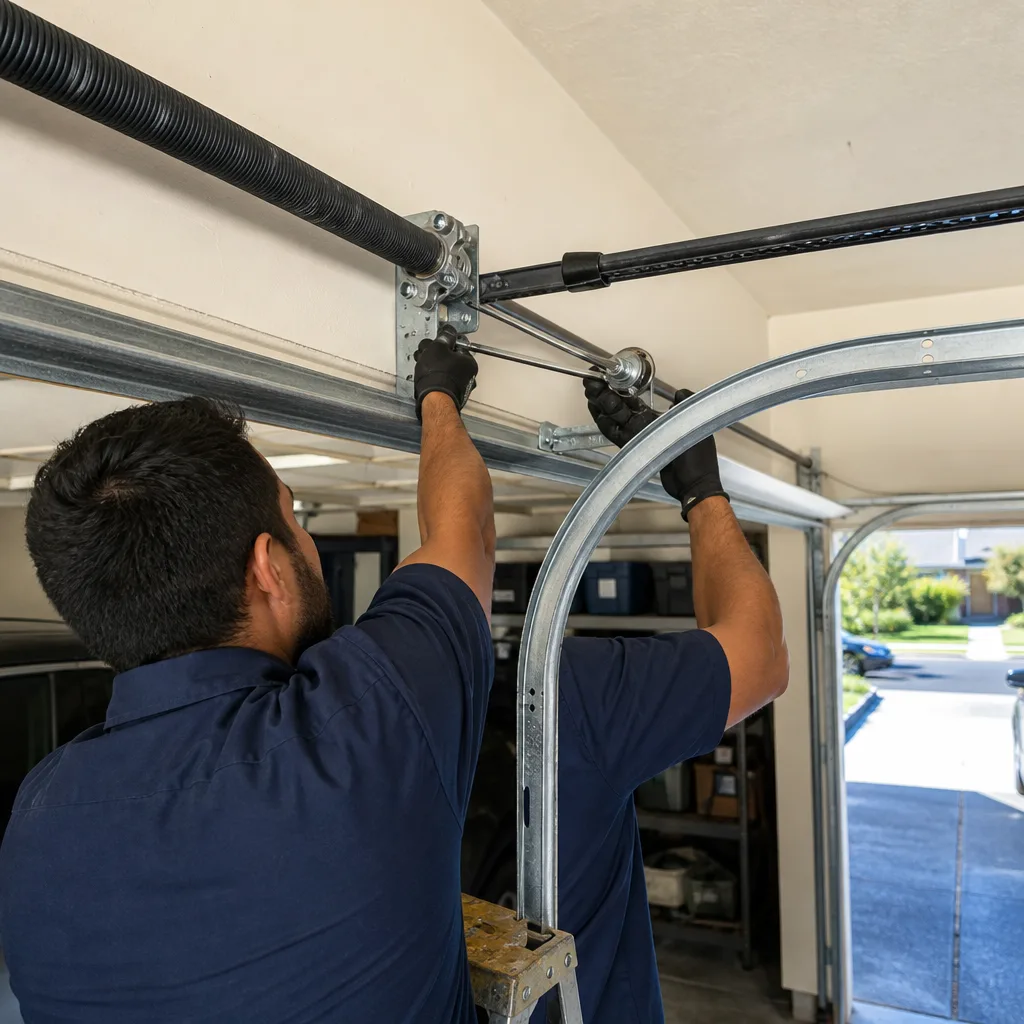
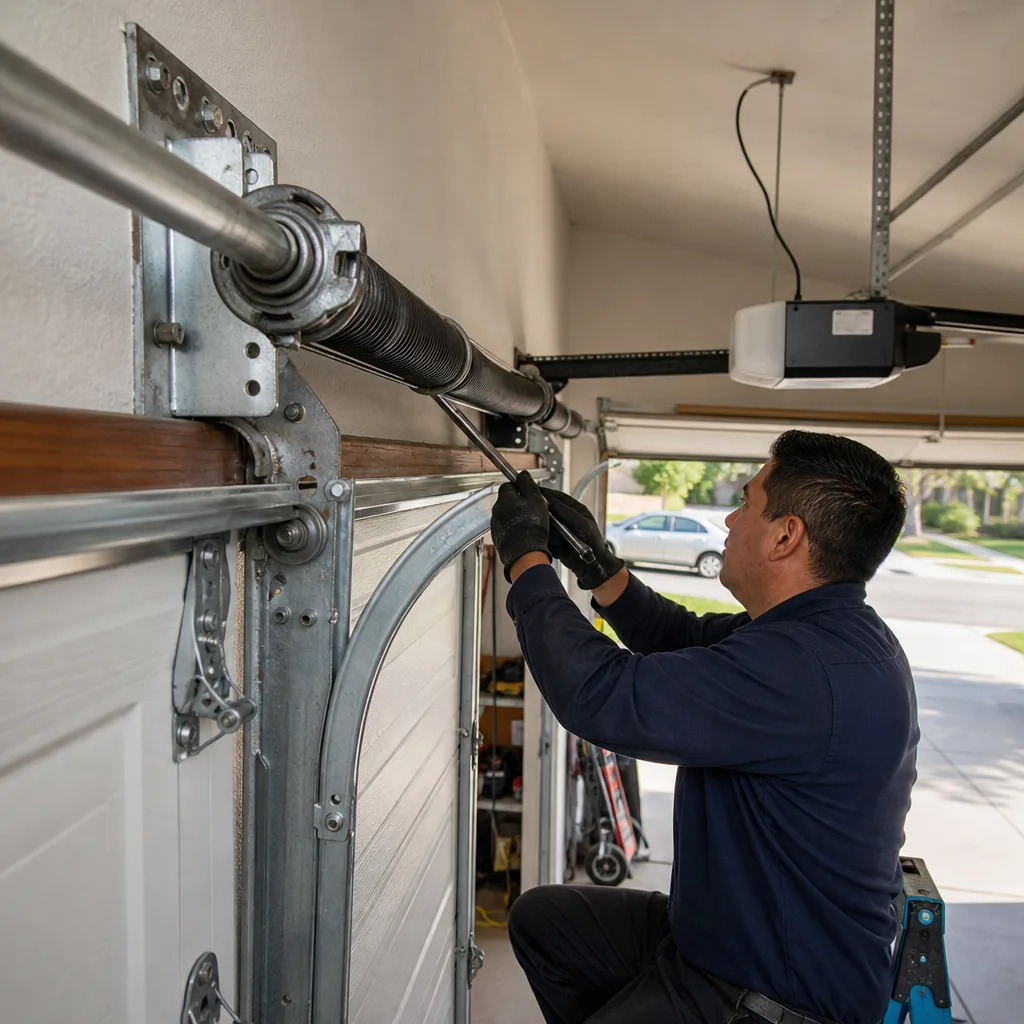
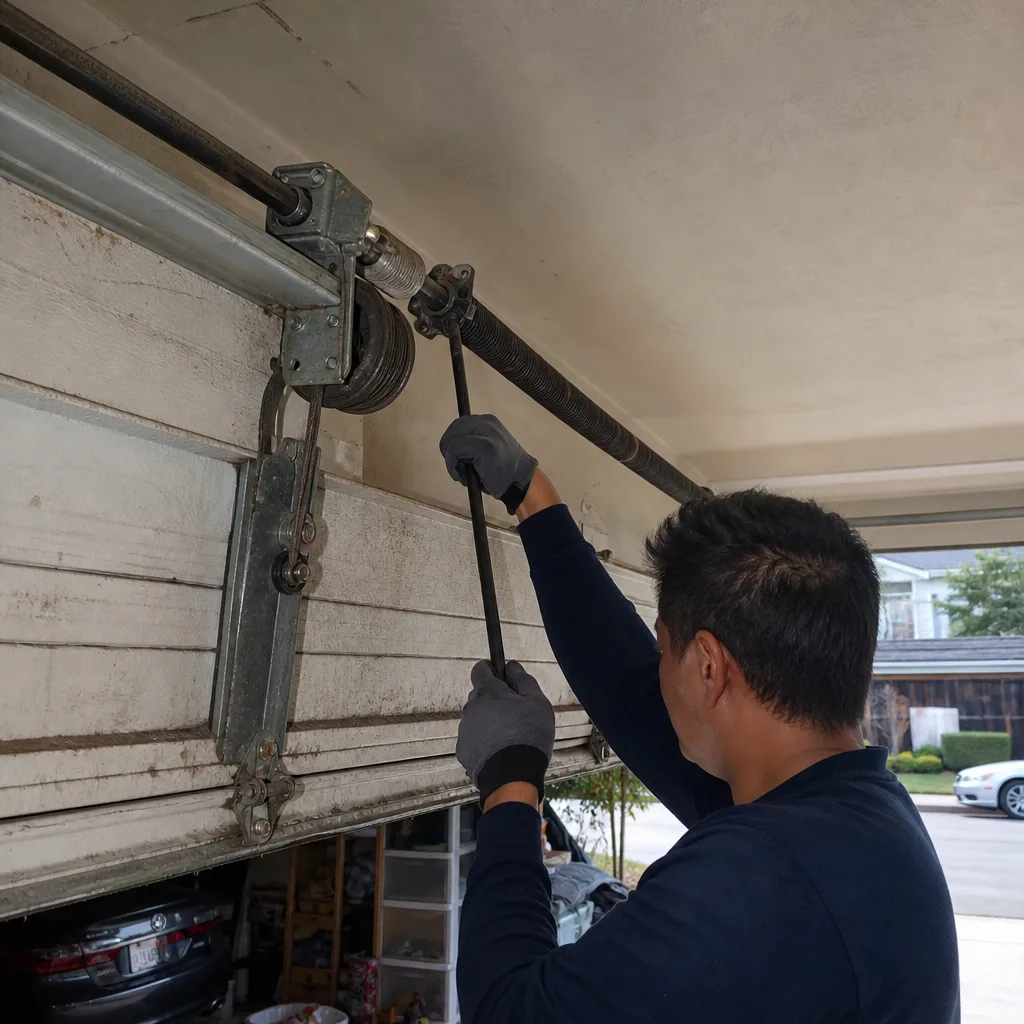
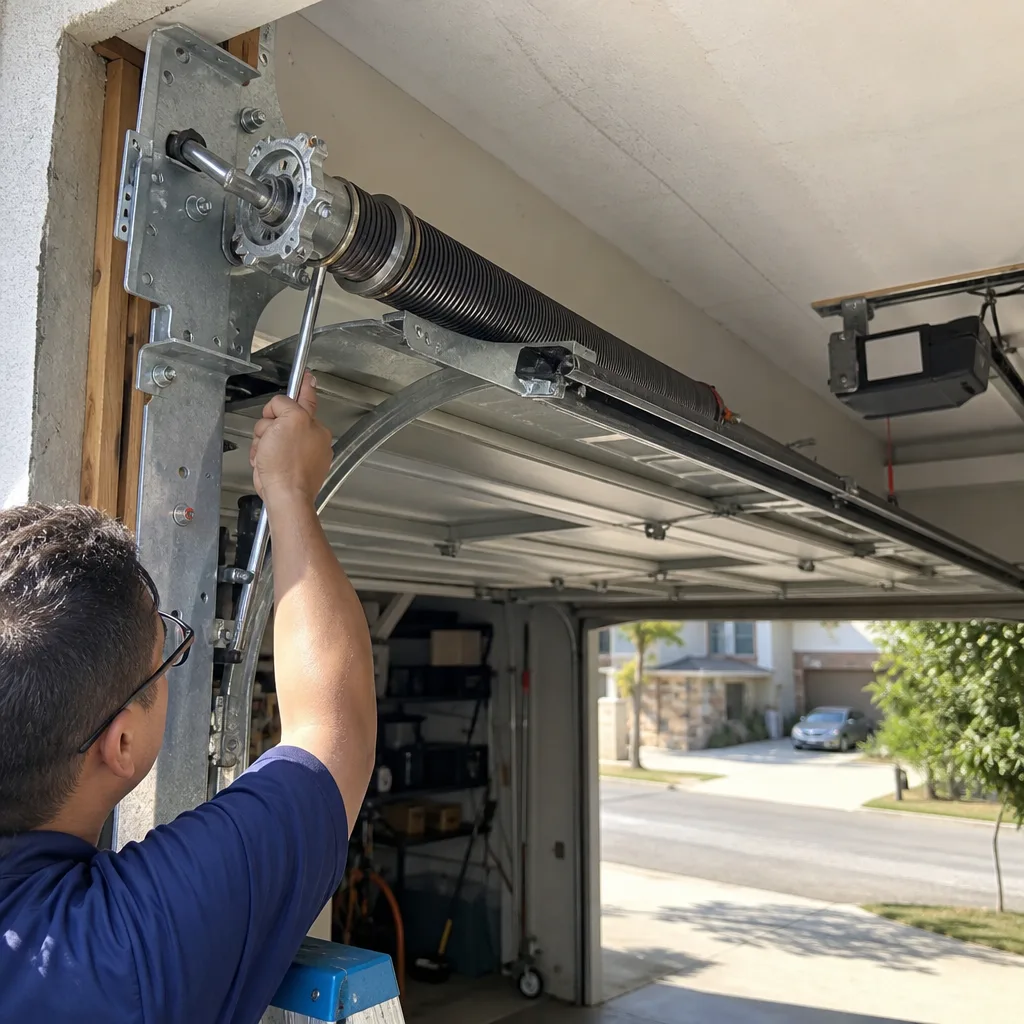
- Spring set-check. With the door closed, look at the torsion spring coil spacing. Springs that are intact have even, consistent gaps between coils. If you see an irregular gap, a stretched section, or a visible crack, do not attempt to manually open the door. A broken or failing spring is under tremendous tension and requires immediate professional service.
Spring lubrication guidance: Spring is the one time of year you should wipe down rather than grease up. The moisture from fog and rain has mixed with last year’s grease to form an emulsion on the hardware. Wipe it off with a clean rag. Apply a light coat of white lithium grease to the torsion spring coil surface, the bearing plates at either end, and the roller stems. Skip the tracks entirely. Track lubrication traps grit and shortens roller life. If a Loud noise persists after lubrication, the issue is mechanical, not friction.
For homeowners with openers from Chamberlain or LiftMaster, spring is also the time to check the safety sensor alignment. Winter moisture and minor house settling knock sensors out of alignment more often than people realize. A misaligned sensor causes intermittent reversal or refusal to close, which feels like an opener problem but is usually a two-minute fix.
Summer: Heat Expansion and Panel Stress
Summer in Milpitas is the season of noise. Panels expand in direct sunlight. Hardware loosens. The door that ran quietly all spring starts rattling by July because every screw in the door has backed out a quarter turn. This is not a sign of catastrophic failure. It is a sign that your door needs a mid-summer tighten-up. Ignoring it puts unnecessary stress on the opener motor, because the opener has to pull harder against a door that’s fighting itself.
What to do in summer:
- Tighten every hinge screw and track bracket. Start at the bottom panel and work up. You’ll find at least a few that have visibly loosened, especially on doors that face west or southwest and take direct afternoon sun. Snug them hand-tight plus an eighth turn. A cordless drill makes this a five-minute job.
- Check panel alignment at the seams. With the door closed and the opener disconnected, run your hand along each horizontal seam. The panels should sit flush. Gaps or offsets indicate a hinge is worn or a panel has warped from heat exposure. Warped panels on older doors are a sign the steel has lost its temper and will eventually need replacement.
- Run the opener with the door disconnected. Pull the emergency release cord and run the opener motor alone. Listen. A healthy opener hums quietly and runs smoothly. Grinding, clicking, or a motor that labors without the door’s weight attached means internal wear. This is the summer killer, because heat plus mechanical friction inside the motor housing shortens component life. If you hear anything unusual, read through Garage Door Opener Repair in Milpitas for details on what can be fixed versus what needs replacement.
- Vacuum the opener rail and chain/belt path. Dust and pollen blow constantly through Milpitas garages all summer. Accumulation on the rail turns a slick drive into a grinding one. A shop vac with a brush attachment removes the grit that acts as sandpaper on the drive mechanism.
- Inspect weatherstripping for UV damage. No rain doesn’t mean no seal damage. Summer UV in Milpitas breaks down rubber and PVC seals through molecular degradation. Look for crumbling, flattening, or a chalky surface on the side and top seals. This is the early warning sign of the winter leak you’ll have in December if you don’t fix it now.
The brand-agnostic approach matters here, though choosing the right garage door brand still affects long-term performance. We work on every door from Clopay and Amarr to Wayne Dalton and Raynor, and the summer expansion problems are consistent across all of them. What differs is how each manufacturer’s panel system handles heat. Some have built-in expansion joints. Others rely entirely on hinge slack. Knowing which system you have determines whether a deformed panel is a warranty issue or a maintenance issue.
Wildfire Smoke Season: The Opener Filter Problem Nobody Talks About
Every August through October in Milpitas, the air quality index spikes as wildfire smoke settles into the valley. You feel it in your lungs. What you don’t notice is what it’s doing to your garage door opener. This is one of the most overlooked maintenance issues specific to the Bay Area, and it causes a measurable number of opener failures every fall.
Most modern openers, including Chamberlain, LiftMaster, and Craftsman models, have cooling vents on the motor housing. The motor generates heat during operation. Air flows through those vents to dissipate it. Smoke particles, ash, and fine particulate matter, the same PM2.5 that the AQI warning tells you to avoid breathing, get drawn into the motor housing along with that cooling air. Over weeks of smoky conditions, those particles accumulate on the motor windings, the circuit board, and the internal moving parts.
The result? A motor that runs hotter because its cooling surfaces are coated in insulation. Hotter motors draw more current. More current means more heat. It’s a feedback loop that shortens the opener’s life. We can’t give you an exact percentage of opener failures attributable to smoke season, but we can tell you that call volume for opener repair in Milpitas spikes reliably in October and November, after a summer’s worth of smoke cuts through the valley.
What to do after any week where AQI exceeds 100 for three or more consecutive days:
- Disconnect the opener from power. Unplug it. Do not work on a powered unit.
- Vacuum the motor housing exterior. Use a brush attachment on every vent opening. Work from the outside in. You want to remove the accumulated film before it gets pulled deeper into the housing.
- Wipe down the interior ceiling and walls near the opener. Smoke particles settle upward. The area around your opener accumulates more residue than anywhere else in the garage. Wet-wipe with a damp rag. Dry immediately.
- Check the safety sensor lenses. Smoke film on the lenses weakens the infrared beam. Weak beams cause intermittent “door won’t close” errors. A dry microfiber cloth restores normal operation in seconds.
- Run a cycle test. Reconnect power. Open and close the door twice. Listen for any change in motor pitch from earlier in the season. A strained or wheezing motor after smoke season often indicates significant particulate intake and may need internal cleaning or a rebuild.
This is also the time of year when air quality compounds existing opener problems. A motor that was already running hot from worn gears or a misaligned track will degrade much faster under the added thermal stress of smoke-loading. If your opener runs noticeably hot to the touch after two cycles, that’s a call to make before November, when the load only increases.
Fall: The Rapid-Cooldown Spring Failure Window
Late October and early November are the most dangerous weeks for garage door springs in Milpitas. The physics are straightforward. Steel contracts as it cools. A torsion spring that was installed and wound in warm weather holds a specific tension at that temperature. When overnight temperatures drop from the 70s to the 50s, sometimes the 40s, the spring coil shrinks. The tension doesn’t change, but the material’s capacity to hold that tension does.
A spring that’s been running fine since March suddenly has a higher effective stress load because the same force is now distributed across a slightly smaller, slightly more brittle coil. Spring steel is designed to flex millions of times, but each flex at higher-than-rated stress consumes cycles faster. The effect compounds. If your spring is more than seven years old or has completed more than 10,000 cycles, which for a door opened four times daily is about seven years, the late-October cooldown is when it gives.
The October service window, in order of importance:
- Inspect the spring for visual damage. Look at the coil gaps with the door closed. Even spacing is healthy. A “stretched” look, with gaps widening in the middle, is a pre-failure indicator. Any visible crack is a stop-using-the-door-now situation.
- Re-lubricate with the correct product. The grease that worked in July will be substantially stiffer by November. More on this below in the viscosity section. For now, know that fall is the most important lubrication of the year because it precedes the lowest average temperatures.
- Tighten the spring mounting hardware. The winding cone bolts and the center bracket bolts expand and contract with temperature. A quarter turn of looseness at the cone concentrates stress exactly where springs fail. Snug them. Do not over-tighten.
- Test the door balance. Disconnect the opener and manually lift the door halfway. It should stay in place when you let go. If it drifts down, the spring tension is no longer matched to the door weight. If it creeps up, the tension is too high. Both conditions accelerate spring wear and overload the opener. Balancing is a job for a trained technician with the correct winding tools.
- Listen for a “pop” during the first cold open of the morning. That’s the sound of a torsion spring failing, or close to it. If you hear one, stop using the door immediately. A spring under partial failure can snap fully at any moment and release uncontrolled force.
Safety note: Torsion springs store enough energy to lift a car door. Working on them without the proper winding bars and experience risks serious injury or death. Inspection and lubrication are homeowner tasks. Spring removal, replacement, and re-tensioning are not. If you’re seeing spring damage in October, call before the failure strands a car in the garage. For full details on spring replacement, see Garage Door Installation in Milpitas, which covers spring replacement as part of full door service. Eight brands, one call.
Winter: Rain, Track Corrosion, and Seal Maintenance
Winter in Milpitas is a corrosion season, not a freeze season. The air is damp. The nights are cold enough to condense moisture on metal. When rain comes, it comes in bursts that saturate the lower sections of the door and the bottom track. Water gets trapped where the track meets the floor, and that standing water is a corrosion factory for the bottom rollers, the track bolts, and the bottom panel retainer.
The winter checklist, before the first big storm:
- Inspect the bottom seal for full contact. Close the door. Look from the inside. If you see light under any part of the door, that’s where water enters. A failed bottom seal in winter turns your garage into a mold farm and shorts out anything stored on the floor.
- Check the track drain holes. Vertical tracks typically have small drain holes at the bottom. If they’re clogged with dirt, water pools inside the track. A wire or a blast of compressed air clears them. This is a 30-second task that prevents rusted-out track sections.
- Clean and lightly lubricate the rollers. Nylon rollers with sealed bearings don’t need much, but the steel stem that rides in the hinge gets a light touch of lithium grease. Steel rollers need the same on their axle. This protects against the wet-dry-wet cycle that pits bare metal.
- Check the weatherstrip along the sides and top. The side seals, called jamb seals, and the top seal compress when the door closes. After a summer of UV and a fall of temperature swings, they lose flexibility. In winter, a stiff seal doesn’t compress enough, leaving gaps that let wind and rain in. Look for uneven compression or visible cracking.
- Verify the auto-reverse function. Place a 2×4 flat under the door’s path and close the door onto it. The door should reverse within two seconds of contact. This safety check matters more in winter because a wet floor can affect the door’s travel settings.
Winter is also when opener problems from earlier seasons show up. A motor that was overworked in summer and clogged from smoke season starts failing under load in cold weather because the colder lubricants and stiffer materials increase resistance. If your opener strains or reverses unexpectedly during winter cold snaps, the root cause is usually a cumulative problem, not a winter-specific one. Diagnosed right the first time matters here, which is why Garage Door Opener Repair in Milpitas is its own specialty, not an add-on. Opener repair is its own specialty. The electronics, the limit settings, the force control, and the drive train are all independent systems that fail on their own schedules.
Lubrication Viscosity: Why Your Grease Fails in January
The same grease that works in July can stiffen enough in January to increase motor load by 30%. This is not a theoretical figure. It’s what we observe on doors across Milpitas every winter when homeowners, or previous service providers, used the wrong product for this climate’s temperature range.
Most off-the-shelf garage door greases are formulated for a general temperature band, typically 0°F to 120°F. That covers Milpitas’s air temperature range. The problem is that garage door grease is rarely applied correctly, and the wrong product applied in the wrong amount creates a compound issue when temperatures drop.
The actual problem is threefold:
- Over-application causes channeling. Too much grease on a torsion spring doesn’t stay where you put it. It channels into the coil gaps and hardens. In July, the excess grease just makes a mess. In January, the same excess is a stiff, waxy block that restricts coil movement and increases spring friction.
- Grease viscosity is temperature-dependent. White lithium grease, which is the standard recommendation for residential doors, stiffens noticeably below about 50°F. The grease itself doesn’t freeze, but it thickens enough that the spring must work harder to flex through it. The harder the spring works, the more load the opener motor must pull. That’s the 30% load increase.
- Cold starts concentrate the effect. In the morning, when the door has been sitting in a cold garage overnight, the grease is at its stiffest. The first open of the day is when the opener motor is under maximum stress. Repeated daily cold-start stress is what burns out motors on doors that would otherwise last for years.
The fix is not exotic: Use a garage-door-specific white lithium grease or a spray lithium. Apply a thin, even coat, not a heavy layer, to the spring coils, the bearing plates, and the hinge pivot points. Never grease the track. Never use WD-40, which is a cleaner and penetrant, not a lubricant. Never use wheel bearing grease, which is far too heavy. And don’t mix products. One good lithium grease, applied four times a year, is the entire lubrication program for Milpitas.
If you have an opener from Genie or Raynor, note that these brands have slightly different rail materials than other openers, and using the wrong rail lubricant can cause the carriage to bind. We work on your brand, whichever of the eight major brands it happens to be. No replacement pitch if a repair will do.
Weatherstripping in a UV-Heavy, Low-Humidity Climate
Milpitas is a strange environment for rubber. High UV exposure year-round, very little atmospheric humidity, and temperature swings from the 30s to the 100s. That combination is brutal on certain types of weatherstripping and relatively easy on others. Knowing the difference prevents a wet garage floor in February and a dusty garage in September.
What fails fast in Milpitas:
- Natural rubber bottom seals. UV exposure accelerates ozone cracking in natural rubber even when it’s not directly in sunlight. The reflected glare from concrete driveways in Milpitas is enough to degrade rubber that’s technically “shaded” by the door. Natural rubber seals typically crack and lose flexibility within two to three years here.
- Cheap PVC jamb seals. The vinyl seals on the sides and top of the door harden in the dry heat and then crack under the compression of winter cold. They lose their “memory” and stop returning to shape after the door opens. Once compressed flat, they no longer seal the gap.
- Adhesive-backed flat seals. These are the peel-and-stick weatherstrip products sold at home centers. The adhesive fails first, usually within a year, because the temperature swings stress the bond line. Once the adhesive lets go, the seal sags and snags, creating gaps.
What lasts in Milpitas:
- EPDM rubber bottom seals. EPDM is UV-stable by formulation. It holds flexibility down to well below freezing and resists cracking from ozone exposure. A quality EPDM bottom seal lasts five to seven years in Milpitas conditions. This is the recommended material for bottom seals on any brand of residential door.
- Thermoplastic elastomer (TPE) seals on Wayne Dalton and Clopay doors. TPE combines the flexibility of rubber with the UV resistance of plastic. These manufacturers have standardized on TPE for their weather sealing, which is one reason their doors maintain seal integrity longer in South Bay conditions.
- Aluminum-retained bottom seals with a locking channel. The aluminum retainer protects the rubber’s attachment point from UV and mechanical wear. The seal slides out and gets replaced without touching the retainer, which is a 10-minute job on most brands, Amarr included.
The pattern to understand: rubber fails from UV, PVC fails from heat cycling, and EPDM and TPE survive both. When you replace weatherstripping in Milpitas, buy for UV resistance first, temperature range second. A seal rated to -20°F but made from UV-unstable rubber will still be garbage in two summers.
The 15-Minute Seasonal Checklist
Here is the entire seasonal maintenance program for a Milpitas garage door, compressed into four quarterly checklists you can actually complete before your coffee gets cold. Each one targets the failure mode specific to that time of year. Do these, and you prevent the vast majority of repair calls that we and every other Garage Door Service Milpitas home technician sees throughout the year.
Spring (March): The Post-Rain Inspection
- Wipe down tracks and hinges with a dry rag to remove moisture emulsion. (2 minutes)
- Inspect bottom seal for cracks and daylight gaps. Replace if failed. (2 minutes)
- Snug all hinge bolts with a wrench. (3 minutes)
- Light coat of lithium grease on torsion spring and bearing plates. (3 minutes)
- Check safety sensor alignment and clean lenses. (2 minutes)
- Test auto-reverse with a 2×4. (1 minute)
Summer (June): The Heat and Dust Tighten-Up
- Tighten every hinge screw and track bracket. (4 minutes)
- Vacuum the opener rail and drive system. (3 minutes)
- Disconnect opener, lift door manually, check balance. Re-engage. (3 minutes)
- Inspect panel seams for gaps or offsets. (2 minutes)
- Check side and top weatherstripping for UV damage. (2 minutes)
- Vacuum opener motor housing vents. (1 minute)
Fall (October): The Pre-Cool Down Service
- Inspect torsion spring for coil gap irregularities or cracks. (2 minutes)
- Re-lubricate spring with lithium grease, thin coat. (3 minutes)
- Tighten spring winding cone and center bracket bolts carefully. (2 minutes)
- Clean all sensor lenses and check alignment. (2 minutes)
- Vacuum opener interior after smoke season. (3 minutes)
- Run opener through two full cycles and listen for changes. (3 minutes)
Winter (December): The Rain-Ready Check
- Verify bottom seal makes full contact along the entire door width. (2 minutes)
- Clear track drain holes with a wire. (2 minutes)
- Lightly lubricate roller stems, not the track. (3 minutes)
- Check jamb seals compress evenly when the door closes. (2 minutes)
- Test auto-reverse function again. (2 minutes)
- Wipe down any visible surface rust on track with steel wool. (4 minutes)
That’s 15 minutes a season. Most of the tools required: a 3/8-inch wrench or socket set, a shop vac with brush attachment, a clean rag, a can of white lithium grease, and a 2×4 scrap block. None of this should require a professional if you’re doing it preventively. If any of these checks reveals a real problem, that’s when it’s time to call in help, not to attempt a fix with hand tools on a wound spring.
Common Mistakes to Avoid
- Using WD-40 to lubricate anything on a garage door. WD-40 displaces moisture and cleans, but it is not a lubricant. It strips the existing grease and leaves moving metal parts drier than they were. Use lithium grease, not penetrating oil.
- Greasing the track. The track is designed for rollers to roll on a clean, dry surface. Grease in the track collects dust and becomes an abrasive paste that eats the roller bearings and the track radius. Grease the roller stems and bearings, never the track.
- Skipping the balance test. An out-of-balance door with the opener disconnected is invisible until the opener motor fails. The door can be out of balance for six months while the opener compensates, burning itself out in the process. Testing balance manually every season catches the problem before it costs you an opener.
- Ignoring the spring until it breaks. By the time a torsion spring snaps, it has typically been showing visual pre-failure indicators for weeks: irregular coil gaps, a lean to one side, or a door that no longer holds position when manually lifted. Pay attention to the warning signs and you schedule a replacement. Ignore them and you get an emergency call, a car trapped in the garage, and a more expensive repair.
- Applying summer grease habits to winter. The heavy grease film you applied in July becomes a stiff waxy obstruction in January. Seasonal lubrication adjustment is not optional in Milpitas, where 40-degree temperature swings between seasons are normal. Use thin coats in fall and winter, slightly heavier coats in spring and summer.
- Assuming the opener is the problem when the door performs badly. Most “opener problems” are actually door problems that the opener is failing to compensate for. Worn rollers, out-of-balance springs, misaligned tracks, and clogged rail surfaces all present as opener symptoms. Replacing the opener will not fix these issues and will eventually destroy the new opener too.
- Neglecting smoke-season cleaning. Around Milpitas, an opener that runs quietly in spring and wheezes by October has probably ingested smoke residue all summer. Skipping the post-smoke-season vacuum means that residue stays in the motor housing through the winter cold snaps, when it causes the most heat-related stress.
When to Call a Professional
There’s a clear line between maintenance and repair. Maintenance is the 15-minute checklist above, and most homeowners can handle it. Repair means anything that touches wound springs, load-bearing cables, track realignment, panel replacement, or opener internals. Springs and cables are under enough tension to cause serious injury or death if they release unexpectedly. If you see a crack in a spring, a frayed cable, a track that has pulled away from the wall, or an opener that sparks or smokes, stop using the door and call. Our complete garage door repair guide for Milpitas homeowners explains which issues are emergencies. Garage Door Service Milpitas offers free estimates in Milpitas, call (833) 589-9493. We work on all eight major brands, LiftMaster, Chamberlain, Genie, Clopay, Amarr, Wayne Dalton, Craftsman, and Raynor, and we diagnose what you have rather than selling you a replacement by default. No replacement pitch if a repair will do.
Frequently Asked Questions
Four times a year, at the start of each season, is the right cadence for Milpitas’s climate. The recommended product is a white lithium grease applied to the torsion spring, the bearing plates, the hinge pivot points, and the roller stems. The track itself should remain dry and unlubricated. If your door sits in direct sun for a significant part of the day, or if you notice increased noise between seasonal services, adjust up to six times a year. Call (833) 589-9493 if you’re unsure whether your lubrication schedule is adequate for your specific door model.
The rapid overnight temperature drop in October contracts the spring coil, increasing effective stress on the spring steel. A spring that has been operating near its cycle limit all summer often fails during the first cold snap of fall. The late-October failure window in Milpitas is predictable enough that we schedule extra spring-replacement inventory in the third week of October every year. If your spring failed, look back at its age: most residential springs last seven to nine years in this climate, and a spring at the end of its cycle life is most vulnerable during rapid cooling.
Yes. Wildfire smoke particles are drawn into the opener motor housing through the cooling vents, where they coat the motor windings and circuit board. The coating acts as insulation, causing the motor to run hotter and draw more current. Over weeks of smoke exposure, this thermal stress accelerates component wear. After any period where AQI exceeds 100 for three or more days, vacuum the motor housing exterior, wipe down the area around the opener, and clean the sensor lenses. If the opener runs noticeably hot, call a professional to evaluate internal contamination.
EPDM rubber bottom seals and thermoplastic elastomer (TPE) side and top seals survive Milpitas conditions far better than natural rubber or cheap PVC. EPDM resists UV degradation and holds flexibility in cold weather, typically lasting five to seven years on a south-facing or west-facing door. Natural rubber cracks within two to three years in this UV-heavy climate. When replacing weatherstripping, buy aluminum-retained seals with a locking channel, which allow the rubber to be replaced separately from the retainer.
Disconnect the opener with the emergency release cord and manually lift the door to the halfway point. A properly balanced door stays in place when you let go. If it drifts down, the spring tension is too low for the door weight. If it creeps up, the tension is too high. Either condition accelerates spring wear and overloads the opener motor. Balance adjustment is not a homeowner task; it requires winding bars and an understanding of torsion spring mechanics. Call (833) 589-9493 for a balance inspection and adjustment.
Is it worth repairing my old garage door or should I replace it?
In most cases, a repair is the right call if the door panels are structurally sound and the track is in good alignment. Panel damage, severe track corrosion, or a door
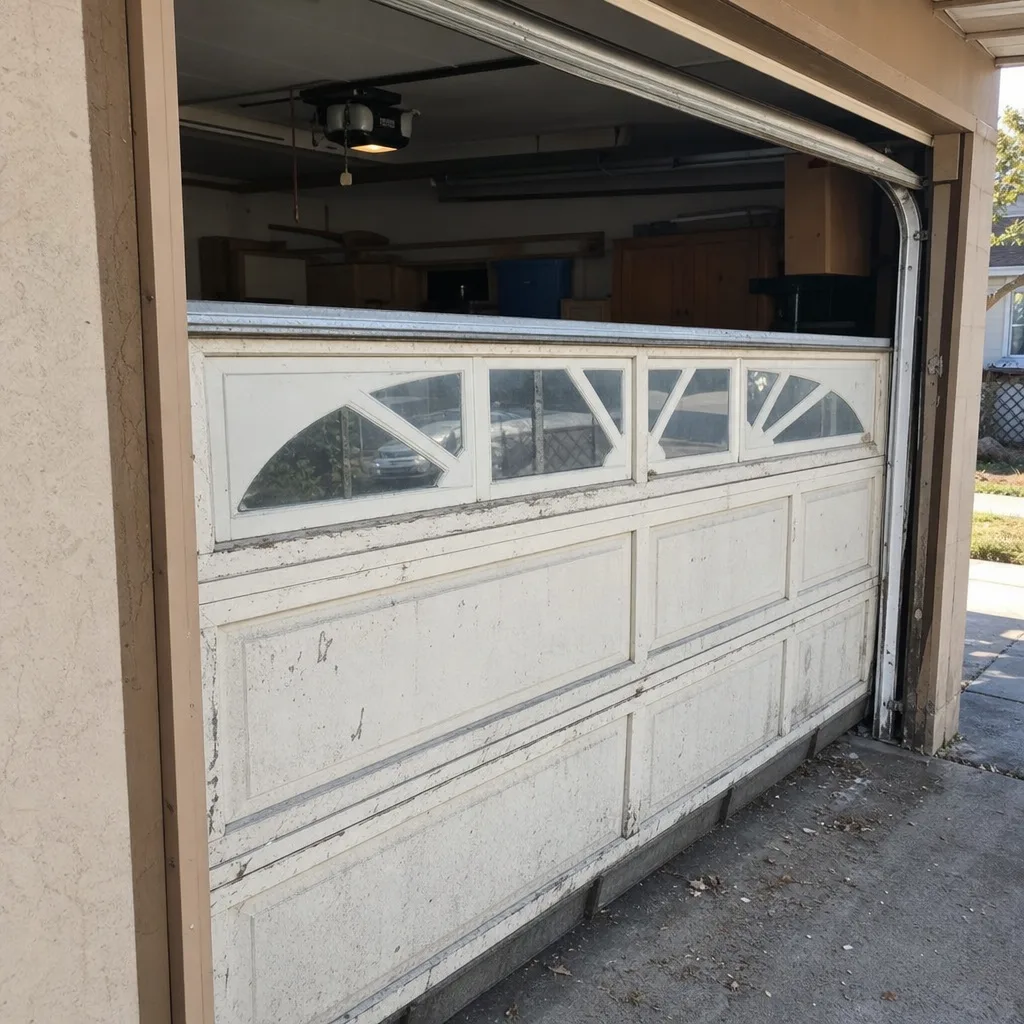
See the difference
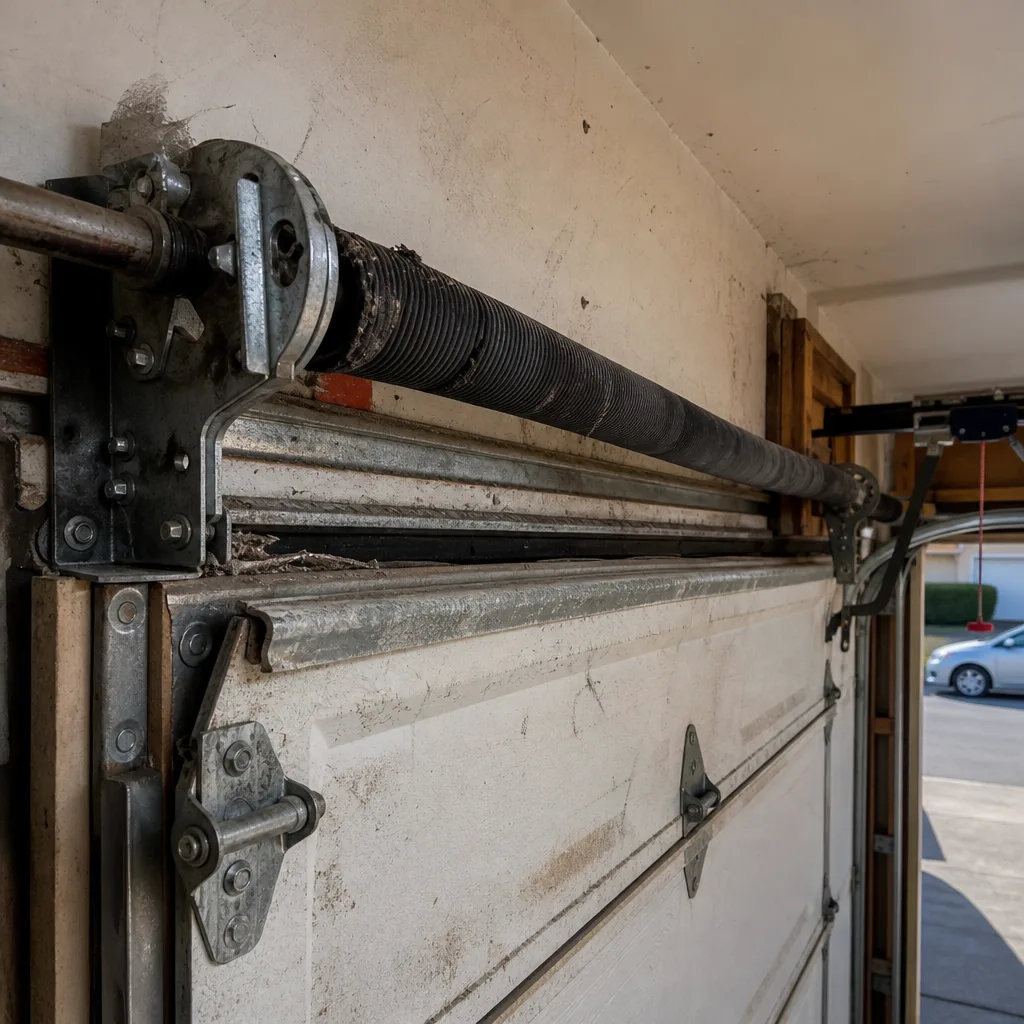 Before
 After
 Before
 After
 Before
 After